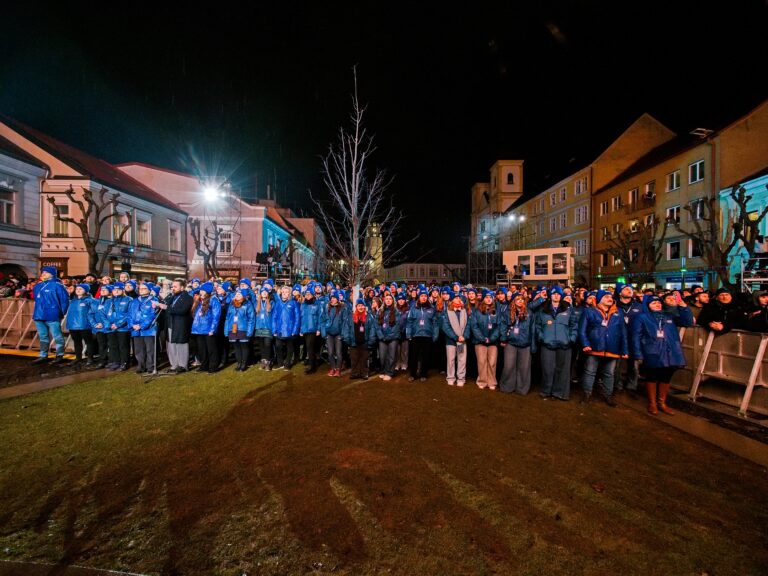
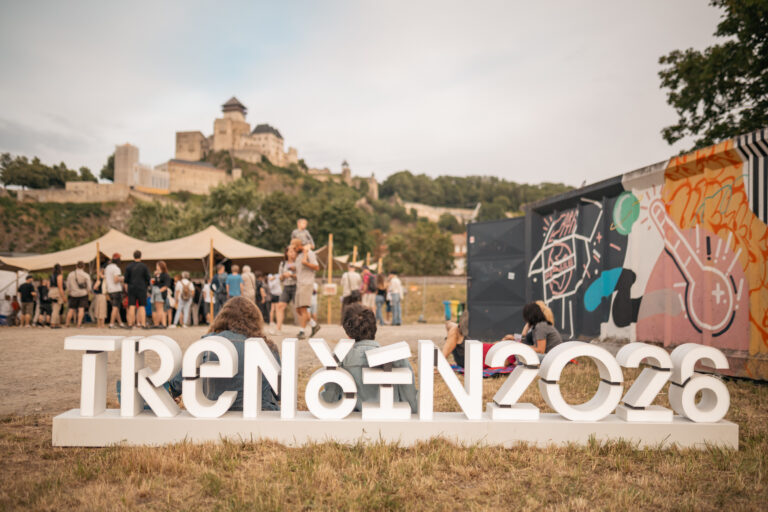
How does a courtyard become a stage, a playground turn into a community salon, and a market transform into a place of co-creation? These and other questions are explored by an ethnographic research project that has been taking place in Trenčín since spring 2025 as part of the monitoring of the European Capital of Culture project Trenčín 2026.
The research is led by the DATA26 team, who use observation, interviews, and analysis to understand how community and cultural activities influence people’s everyday lives in different parts of the city. These are stories, emotions, conversations, and small moments that change the way residents see their neighbourhoods – and themselves.
Where are we asking questions
The research team focuses mainly on city districts outside the traditional centre – where life flows between benches, apartment blocks, and playgrounds. Specifically:
- Sihoť – courtyards on Švermova, Jiráskova, Hurbanova, G. Viesta streets, and also the HRYbik area (Považská – Gagarinova – Osvienčimská),
- JUH – Jána Halašu and Halalovka playgrounds,
- Dlhé Hony – mainly the market area on 28. októbra Street,
- Zlatovce and Záblatie.
Why these locations? These are places where activities from the project Living Neighbourhoods take place – supporting the creation of new communities, connecting neighbours, and transforming forgotten spaces into meeting and collaboration spots.
How does the research work?
Imagine a conversation during a walk through a housing estate, where words naturally mix with gestures and pointing at the surroundings: “My children used to play here, now we organise picnics.” These ethnographic walking interviews are one of the main research methods.
In addition, the researchers:
-
observe community events directly on site,
-
conduct in-depth interviews about daily life, culture, and participation,
-
analyse publicly available data about city districts,
-
take part in group discussions that uncover common needs and visions.
All of this is done sensitively and ethically – with emphasis on anonymity and trust of all participants.
What are we trying to find out?
We are interested in how new urban traditions arise – from neighbourly barbecues to community gardens. We are watching whether cultural activities make people feel more at home, more engaged, and more willing to create together. Above all, we want to discover what changes will endure after 2026 – when the spotlight fades but city life continues.
Why does it matter?
This research isn’t just about data. It’s about capturing atmosphere. About understanding how small changes in neighbourhoods create big changes in the city. A neighbour’s table with cake can be the start of a new story. And those are the kinds of stories we document – so they won’t be forgotten.
The findings of the research will help the Trenčín 2026 team not only to evaluate the project’s success but also to plan Trenčín’s future – with an emphasis on long-term quality of life in neighbourhoods.
If you live in one of the mentioned districts and cultural or community activities have affected your life, your story might become part of the mosaic the research is building. And if not, maybe now is the right time to open the door to a neighbour and get involved.
If you have questions, feel free to contact us:
Zuzana Pešťanská, lead researcher
📧 zuzana.pestanska@trencin2026.eu
Katarína Rozvadská, Head of Monitoring Department
📧 katarina.rozvadska@trencin2026.eu
The project is organised by Trenčín 2026. It is financially supported by the City of Trenčín, the Trenčín Self-Governing Region, and the Ministry of Culture of the Slovak Republic. The project’s partner is the European Union.