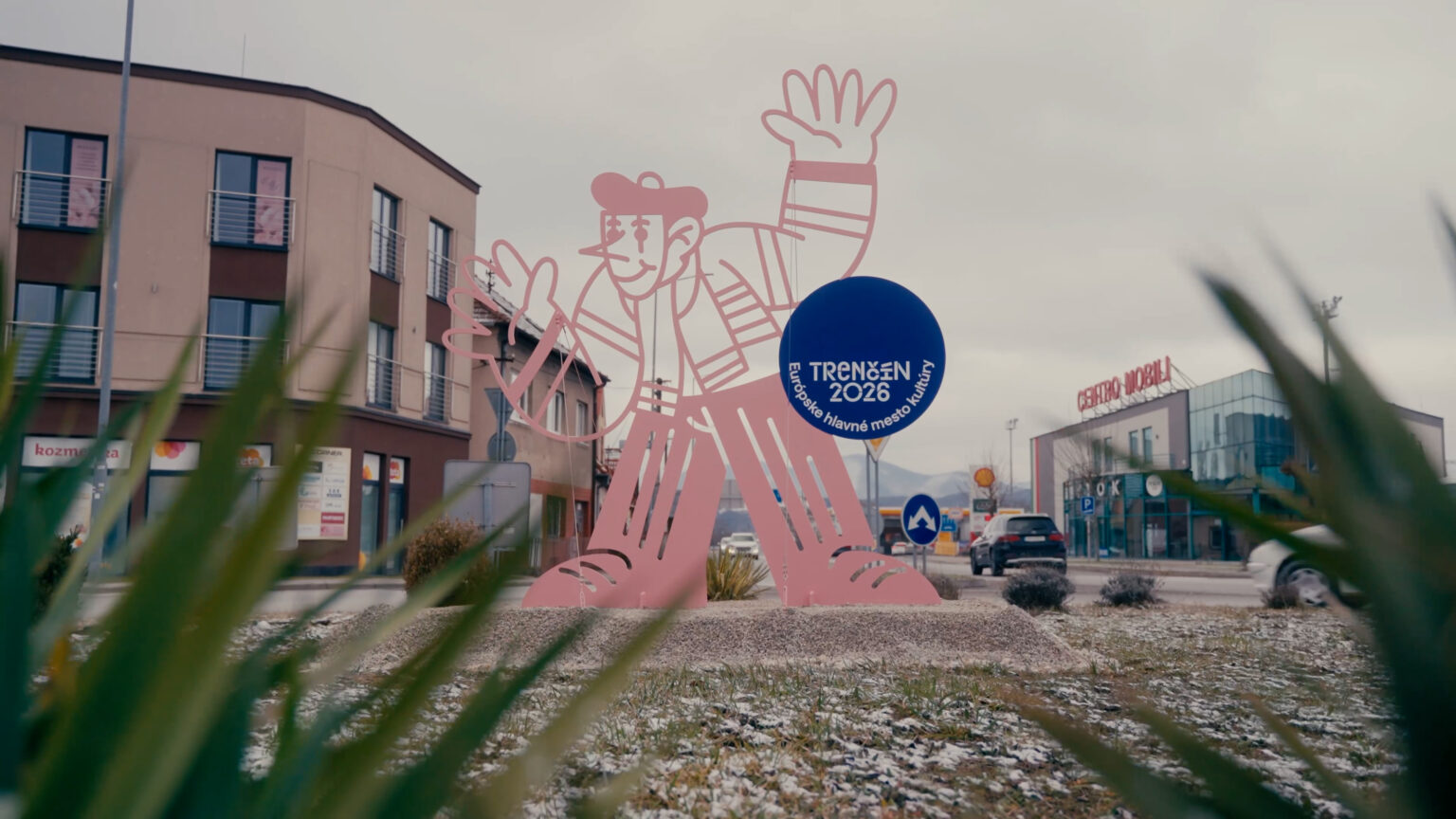

During 2026, some roundabouts in Trenčín are becoming unmissable landmarks of the city. Illustrations by Jozef Glaba bring elements of culture, curiosity, and a new urban story into them. In this way, art enters everyday life directly and reminds us that Trenčín 2026 lives not only in its programme, but also in the spaces we pass through every day.
What happens when a place of everyday movement becomes a place of curiosity?
In Trenčín, roundabouts will begin telling a story of culture throughout 2026.
The illustrations we have placed on selected roundabouts across the city bring colour, visual imagination, and symbols of Trenčín 2026, the European Capital of Culture, into public space. Places we usually only pass by are suddenly becoming points we notice, remember, and perhaps even slow down for a moment to take in. This is one of the ways we are awakening curiosity where few would expect it.
The author of the illustrations is illustrator Jozef Glaba, who has long been connected with the visual world of Trenčín 2026. His distinctive style had already appeared in the illustrations for Korzo, where urban space, communities, and culture come together. It was there that the first images for Trenčín 2026 were created, showing that the city itself can also become a canvas. Later, he prepared more illustrations for the project, including visuals for the programme book. These depict a new Trenčín, Fiesta Bridge, communities, curiosity, and the many different forms of culture.
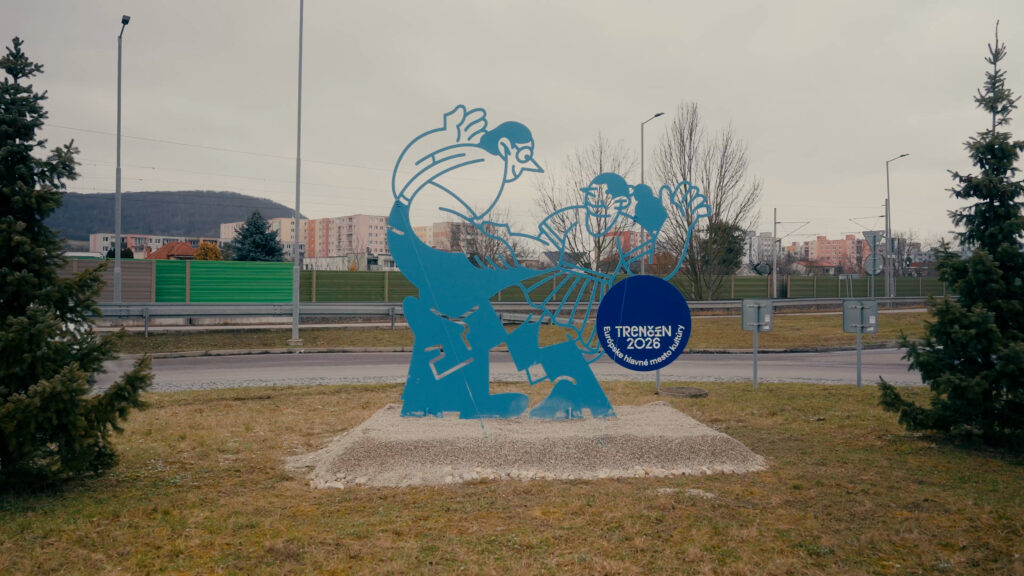
According to him, the project of illustrations for roundabouts in Trenčín was not about deep concepts or artistic installations, but about a clear and accessible visual language for public space. “With the roundabouts, we are not capturing the atmosphere of a city being transformed through culture, but rather depicting simplified images from the cultural world that complement the urban space and communicate the activities of the European Capital of Culture,” he adds.
And that is precisely where their strength lies. Roundabouts are places of movement, connection, and direction. And that is exactly what the Trenčín 2026 project is also about. Culture here is not closed behind doors. It comes out into the streets, enters everyday life, and creates new connections between people, places, and ideas. A bridge can become the centre of the city. A street can become a space for meeting. Even a roundabout can carry a cultural message.
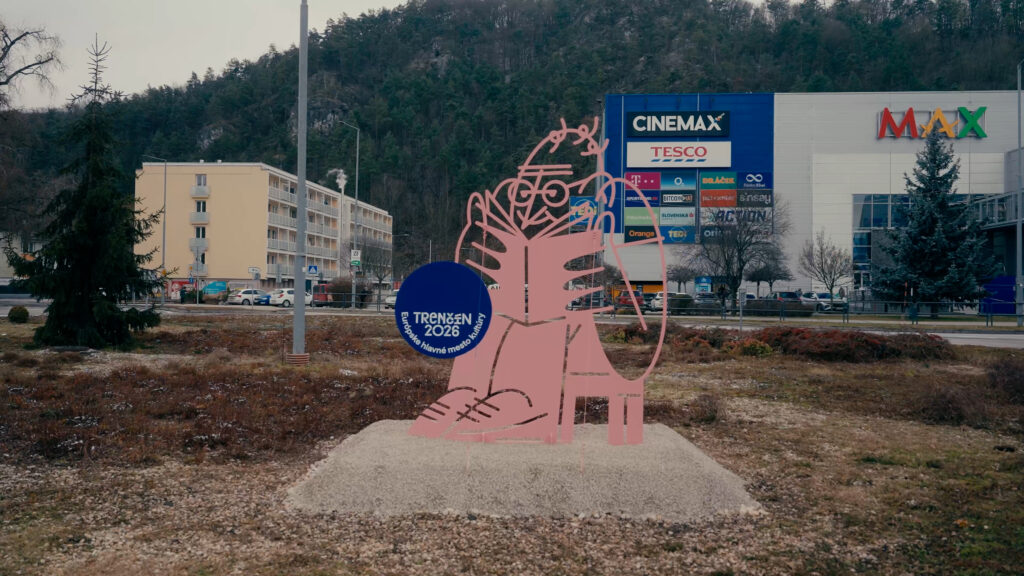
The illustrations on the roundabouts represent culture in the broadest sense of the word. They speak not only about art, but also about community, neighbourhood, sharing, movement, openness, and the joy of discovery. They remind us that culture is not created only on a stage or in a gallery. It also comes into being between us, in public space, in conversations, and in the way we look at our city and shape it together.
For Jozef Glaba, collaborating with Trenčín 2026 is also exceptional because of its scope and significance. “What makes it exceptional compared to other projects I work on is probably the fact that it is a European Capital of Culture,” he says. At the same time, he adds that it is a project involving a larger team, a greater degree of attention, and more organisational complexity. Even so, he sees the experience positively: “It is certainly a valuable collaboration in many respects.” The human dimension of the collaboration was also important to him. “It is a long-term collaboration that has been very pleasant in terms of communication with Trenčín 2026,” he concludes.
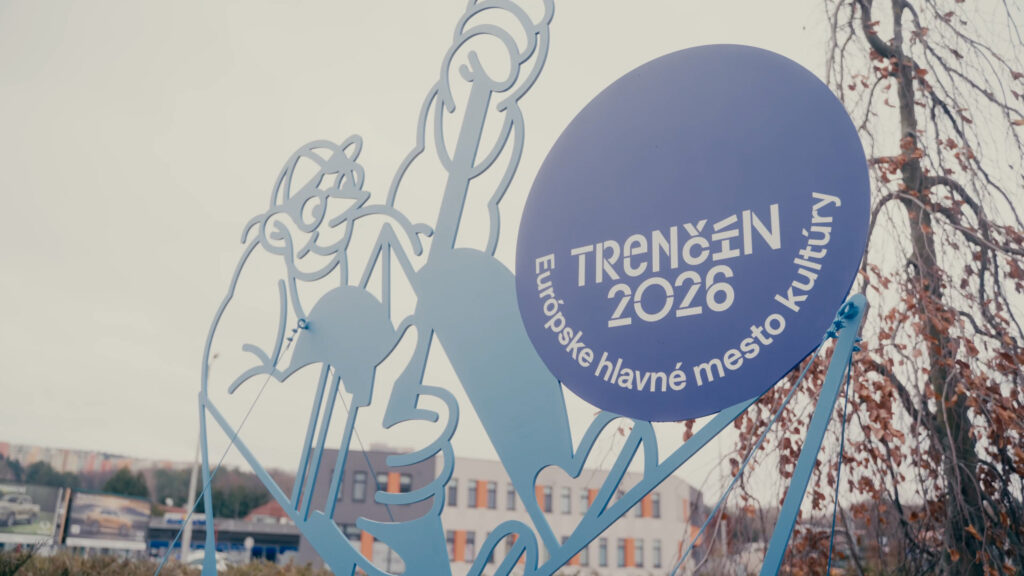
We want culture to be a natural part of life in the city and the region. We want to find it not only in the programme, but also in the details that shape the atmosphere of a place. That is why the illustrations on the roundabouts are more than just a visual element. They are an invitation to look at Trenčín differently — as a space where imagination meets everyday life.
The next time you pass through one of these points in the city, try taking a closer look for a moment. You may see a piece of the new Trenčín in them. A city unafraid of colour, symbols, or bold imagination. A city that believes culture belongs even in places where we do not usually expect it.