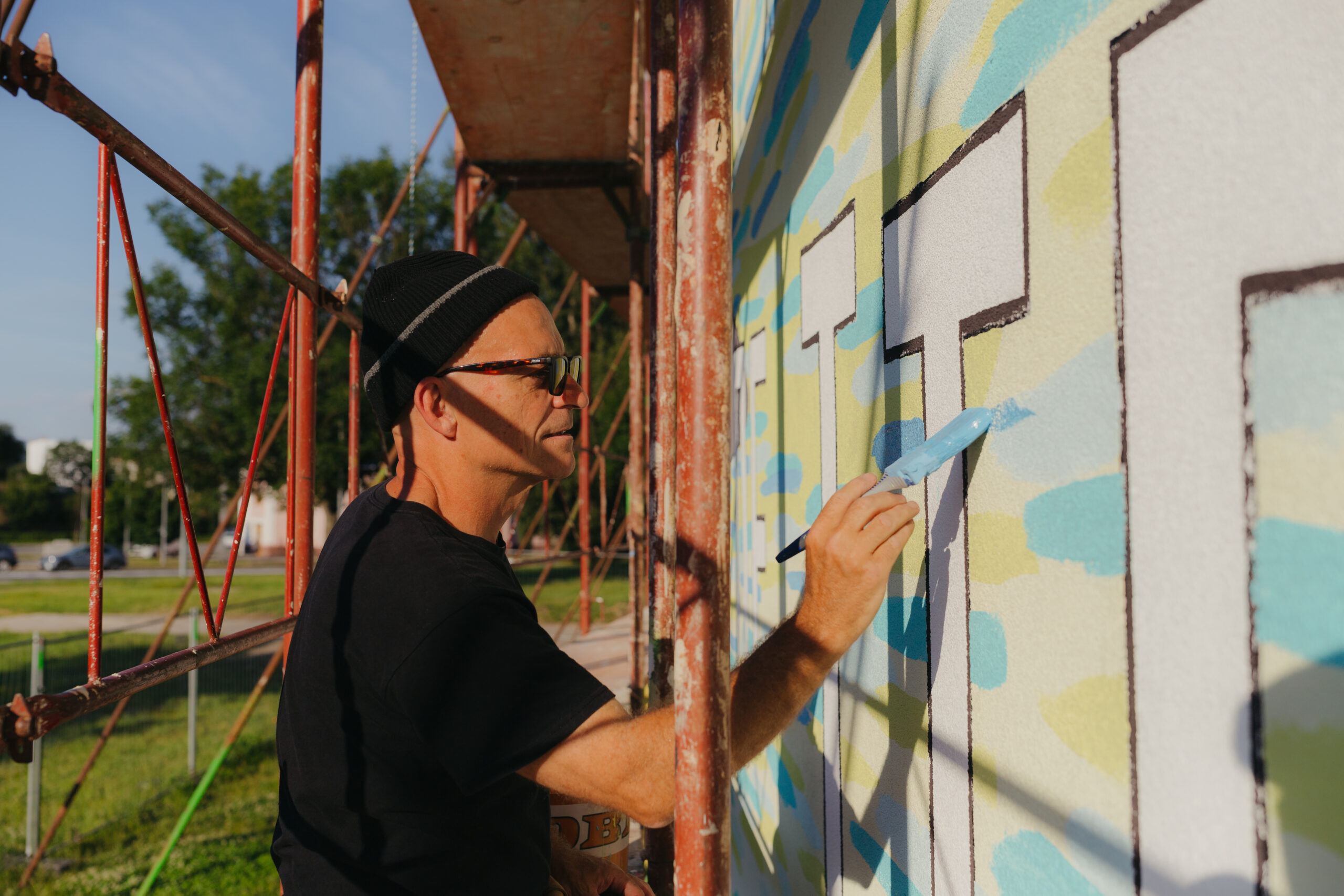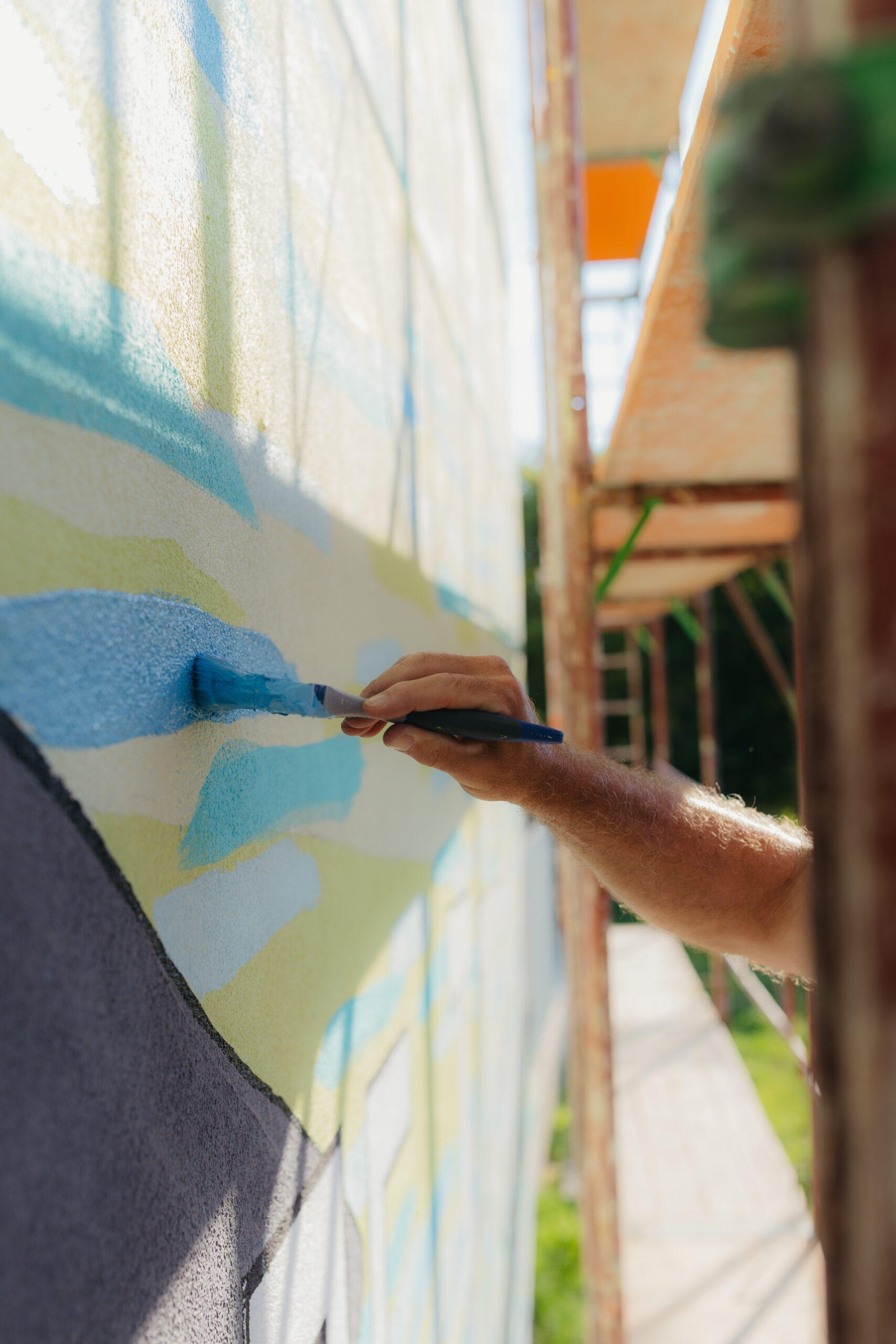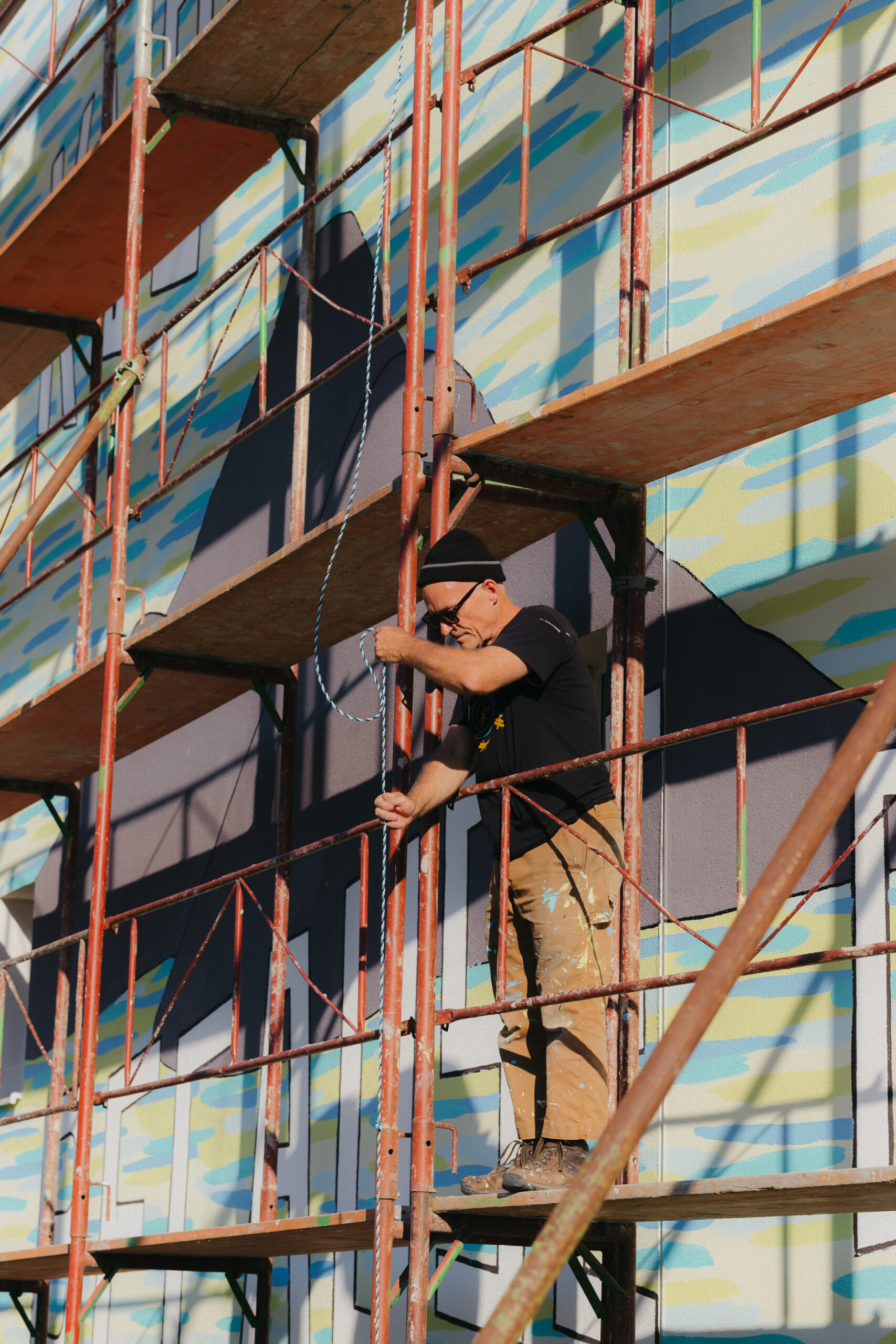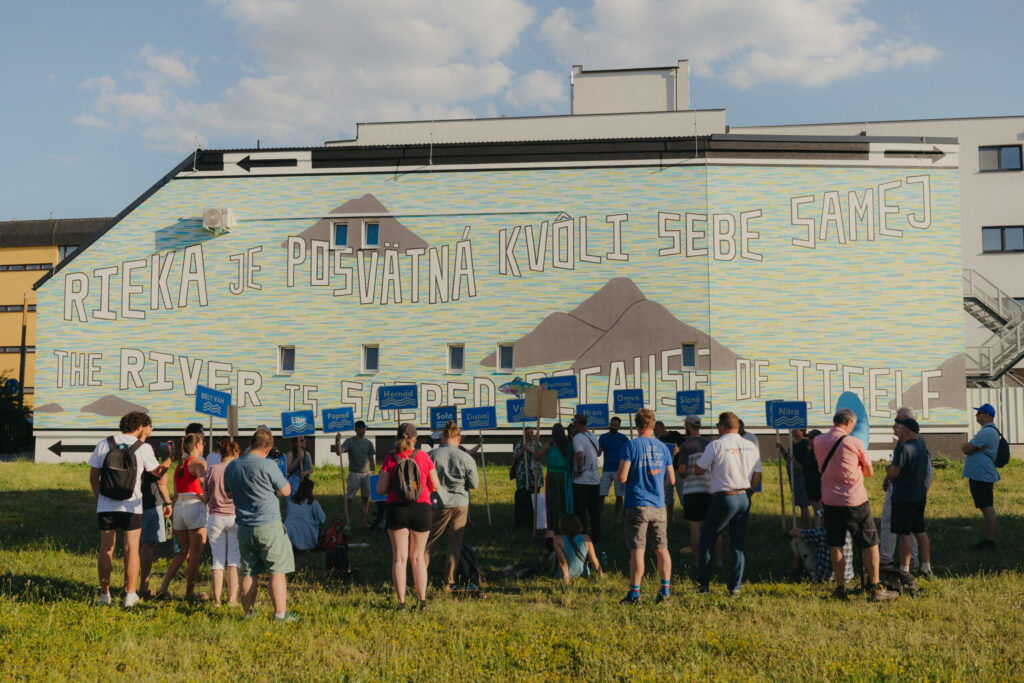
The mural The River Is Sacred Because of Itself, created for Trenčín – European Capital of Culture 2026, invites us to perceive the Váh River not merely as a geographical feature, but as a sacred entity inseparable from the life of the community.
Place: Nízkoprahové centrum, Trenčín
Rigo 23 the River is sacred because of itself “One way to stop seeing trees, or river, or hills, only as ‘natural resources’, is to class them as fellow beings—as kinfolk.”
Ursula Le Guinn
The Trenčín shelter building stands in the open space of a traffic junction and parking lots. It is nestled in the in-between space between the historic city and the green corridor on the riverbank. With his monumental mural, Portuguese American artist Rigo 23 brings the visual presence of the Váh River into this bustling urban environment. The horizontal movement of the river from its source to its mouth is emphasized in the painting by a multitude of hand-applied brushstrokes and is interrupted only by boulders of various sizes – symbols of peace in the flowing time of the river. The painting is framed by graphic strips containing small arrows that invite the viewer to look beyond the physical boundaries of the wall.
The title of the work and the striking bilingual inscription on the wall are a quote from Julian Lang, an elder of the Karuk tribe. Their territory extends along the upper banks of the Klamath River in northwestern California. The word “Karuk” itself translates as “upriver” or “upstream”. The culture, language and rituals of this tribe are strongly connected with the aforementioned river. Despite the fact that the river brings moisture, life and is a source of livelihood, for the Karuk tribe it is “sacred in itself”. They are aware of its value, feel connected to it, perceive their role to protect it regardless of its “benefit”.
The Váh River in the immediate vicinity of the work is perhaps the most important Slovak river – once wild, floated by rafts with wood, today tied into a solid system of banks and dams (Váh cascade). In the past, the wandering and wild Váh had an unstable bed, which changed shape and direction after each major flood. In contrast to the taming of this great river by construction in the last century, there is the decades-long struggle of the Karuk to remove dams on the Klamath River. It culminated in the largest dam removal in the history of the United States that allowed the Klamath River to flow freely for the first time in over a century.
Rivers, mountains, forests, and seas know no borders; natural entities seamlessly intersect across countries and continents. And just as the wisdom of indigenous peoples is universal, the words of a North American native tribe have value on both sides of the ocean. It is no coincidence that they intersect with the ideas of deep ecology defined by the Norwegian philosopher Arne Næss: “The well-being and flourishing of human and non-human life on Earth have value in themselves. These values are independent of the utility of the non-human world for human purposes.”
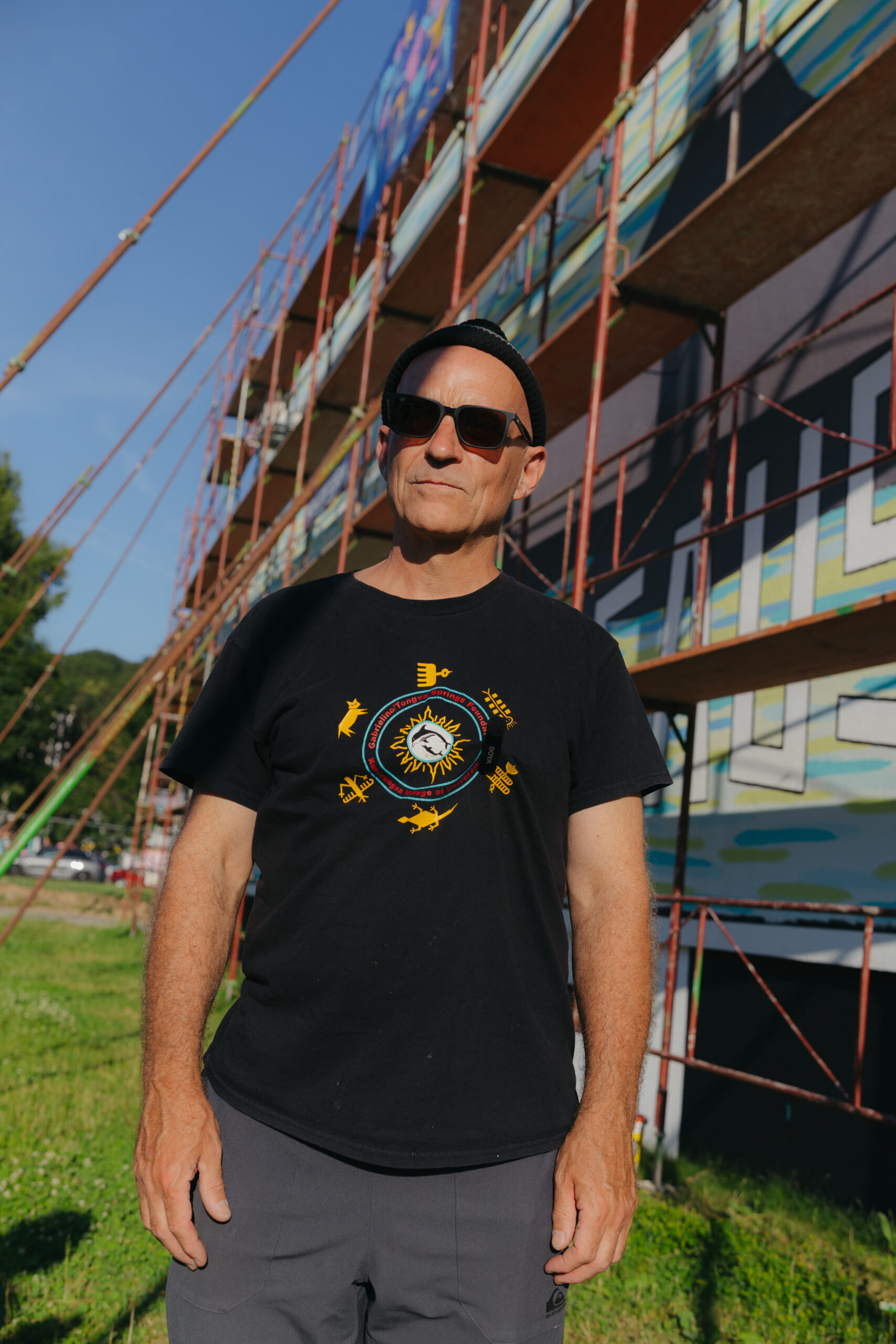
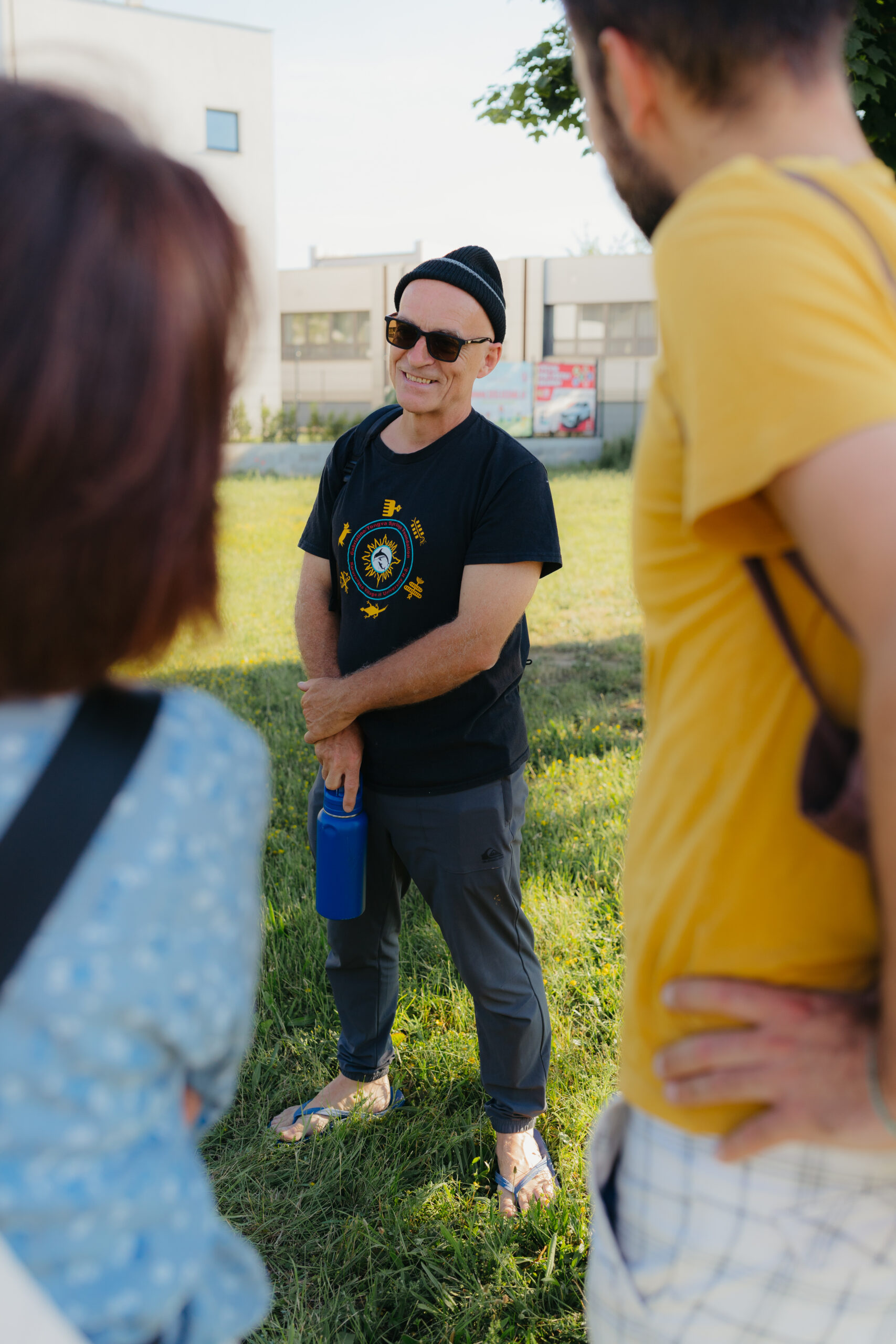
Rigo 23, whose birth name is Ricardo Gouveia (1966), comes from the Portuguese island of Madeira and has lived and worked in the United States since 1985. His works—murals, paintings, sculptures, and installations—are often placed in public spaces and work with communities and activists—whether it’s the Black Panthers, the Zapatista movement, or collaborations with indigenous peoples of the Americas or young Palestinians. His work blends traditional craft techniques, the language of muralism and conceptual art, but also activist, political, and environmental themes. His work is represented in the collections of institutions such as the San Francisco Museum of Modern Art, the Serralves Museum, and the Calouste Gulbenkian Foundation, and he has exhibited at major international events including the Lyon Biennale, the Kochi-Muziris Biennale in India, and the Aichi and Auckland Triennials