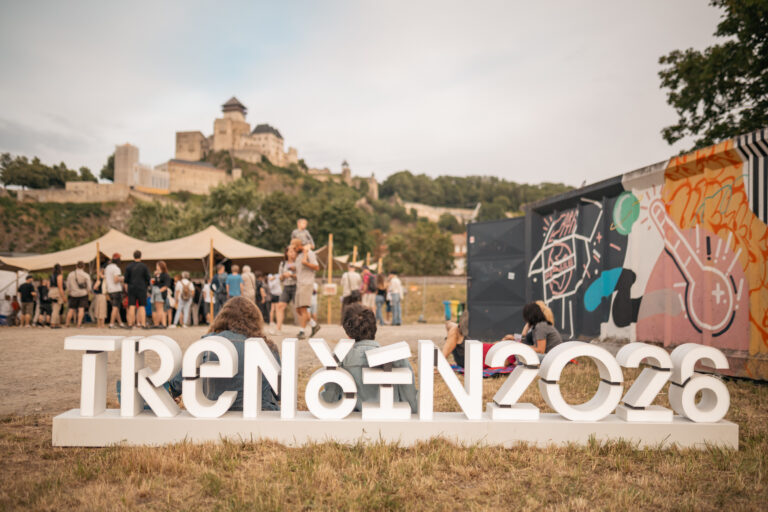
The Regional Tourism Organisation (OOCR) Trenčín and surroundings, renamed to Region Považie, has new leadership. Zuzana Epperson will take up the post of executive director from 1 August 2025. The change comes at a crucial time when Trenčín is becoming the European Capital of Culture for 2026, in which the Považie Region is actively involved.
A comprehensive transformation of tourism in the region
Today, the Region of Povazie organisation brings together six municipalities – Trenčín, Beckov, Čachtice, Kálnica, Uhrovec and Nové Mesto nad Váhom – and five business entities, including the Elisabeth Hotel****, Kálnica Bikepark, Beckov Castle, n.o., N-NOREA, a.s. and, most recently, the Creative Institute Trenčín, n.o. (KIT), which is implementing the Trenčín 2026 project.
It was KIT that brought a strategic change plan to the organisation based on the experience of European cultural capitals, including Košice in 2013. The aim is to ensure comprehensive destination management and marketing of the Považie region, which will be able to offer experiences for domestic and international visitors in the long term, even after the Trenčín 2026 project is completed.
Support from the city management and KIT
“The Trenčín 2026 project brings opportunities for sectoral networking not only in the cultural and creative industry, but also cross-sectorally – especially with tourism, for more experiences offered to tourists,” said Stanislav Krajčí, director of the Trenčín 2026 team. “That is why, together with the Mayor of Trenčín, Richard Rybníček, we have supported the transformation of the regional tourism organisation, which aims to expand the membership base to the districts of Ilava and Puchov, where the OOCR has not been active so far,” he added.
The mayor of Trenčín, Richard Rybníček, also expressed his support: “I support the unification of the strong Považie region, which has a lot to offer. In addition, the connection with the strong Trenčín 2026 brand could bring back foreign clients to the region, who have been significantly absent since COVID. Joint marketing is a necessity that many successful Slovak regions have already understood.”
The vision of the new executive team
As of 1 August 2025, Zuzana Epperson will become the Executive Director of OOCR Región Považie and will lead the implementation of the new strategy and the expansion of the organisation’s remit in relation to the Trenčín 2026 project. By autumn 2025, the OOCR team will also be strengthened by a marketing manager and a manager for the care of foreign journalists and professional visitors, creating a coherent team capable of effectively developing destination marketing and coordinating the region’s preparation for increased visitor interest.
Zuzana Epperson brings valuable international tourism industry experience to the organization. She returned to her native Povazie after sixteen years working in global outdoor travel agencies, where she dealt with a predominantly American clientele. While abroad, she prepared and implemented experiential itineraries for smaller and larger groups to destinations such as Bhutan, New Zealand, Patagonia and Norway.
“I believe that the Považie Region has the potential to become one of the most distinctive tourist areas in Slovakia. Our goal is to connect culture, experiential tourism and quality infrastructure so that visitors take away a reason to return. The Trenčín 2026 brand is our ally and accelerator of this change,” said Zuzana Epperson.
Tourism in Povazie in numbers
In 2024, the Trenčín Region was visited by approximately 355 thousand visitors who recorded a total of 1.26 million overnight stays. The Považie region (the districts of Trenčín, Nové Mesto nad Váhom, Ilava, Púchov and Bánovce nad Bebravou) accounted for 63% of this, i.e. approximately 790 thousand overnight stays. Foreign visitors accounted for only 14%, while in the record year 2019 it was up to 24.2%.
Context and background
The transformation of the OOCR into the Považie Region is part of a broader strategic framework related to the Trenčín 2026 European Capital of Culture project. This project is also an opportunity to change the approach to tourism – from passive presentation to active creation and sale of experiences. The Považie region is thus preparing for the period after 2026 with the aim of leaving sustainable results in the field of tourism and regional development.
Trenčín 2026 is financially supported by the City of Trenčín, the Trenčín Self-Governing Region and the Ministry of Culture of the Slovak Republic. The European Union is a partner.