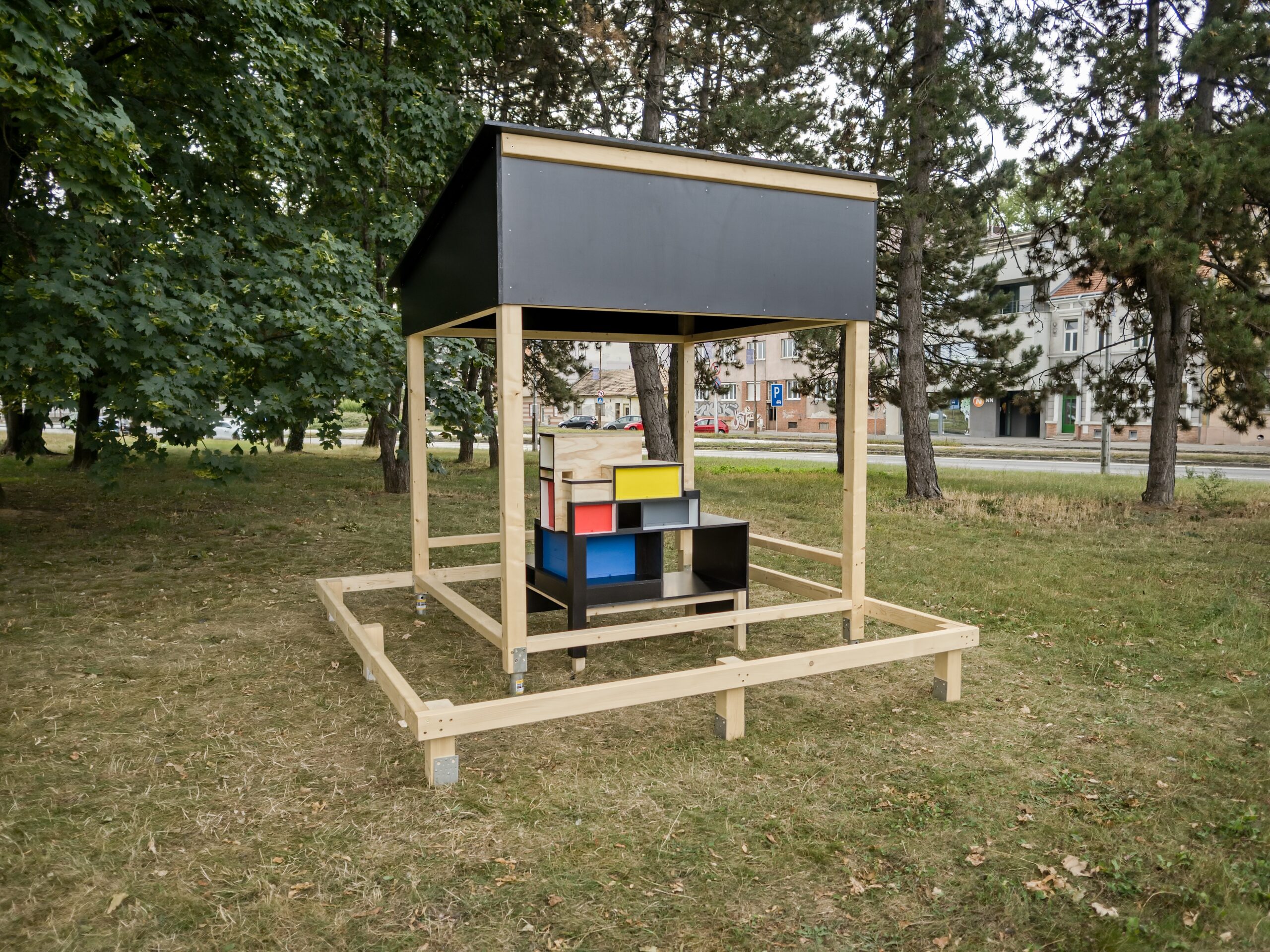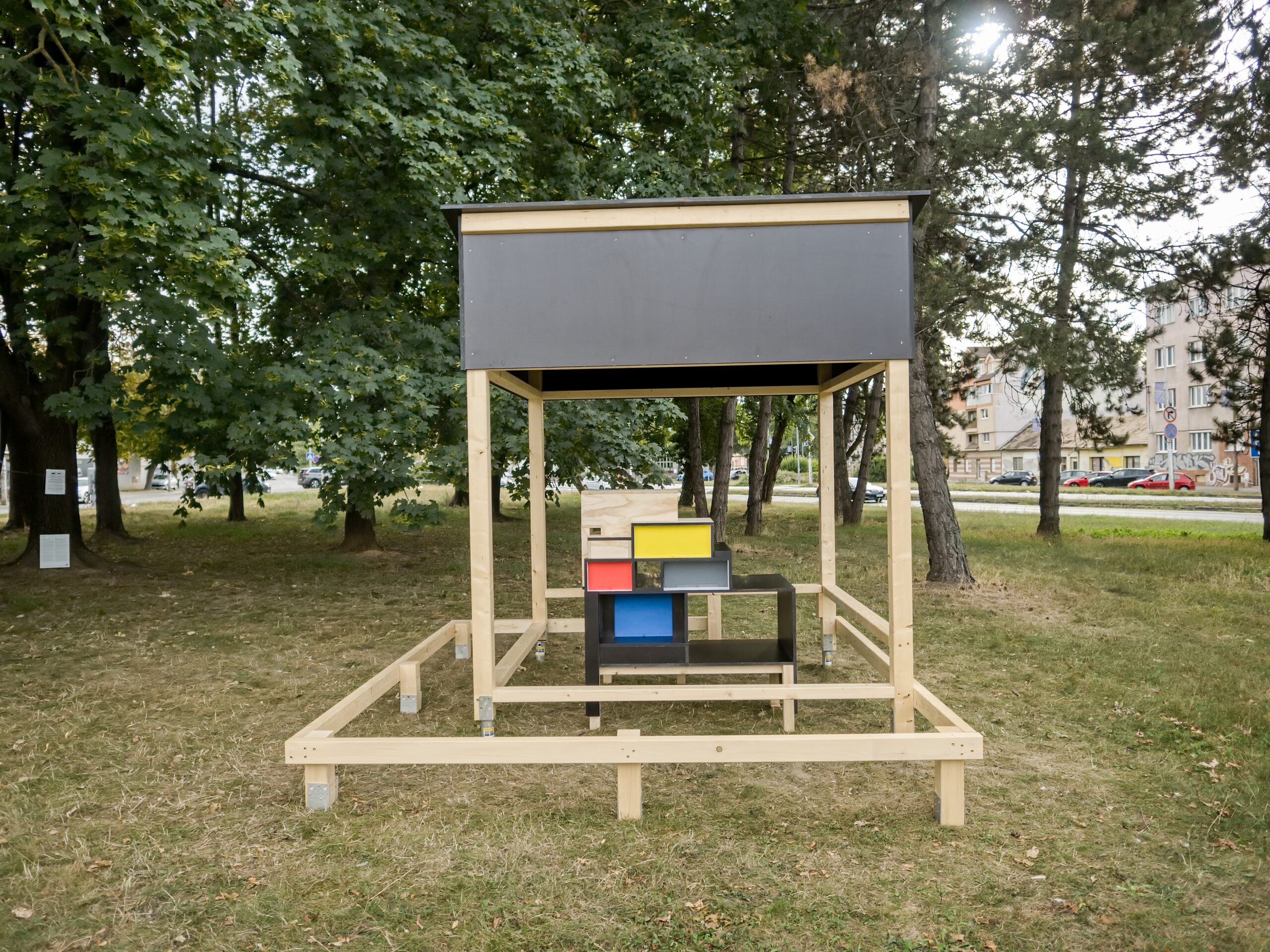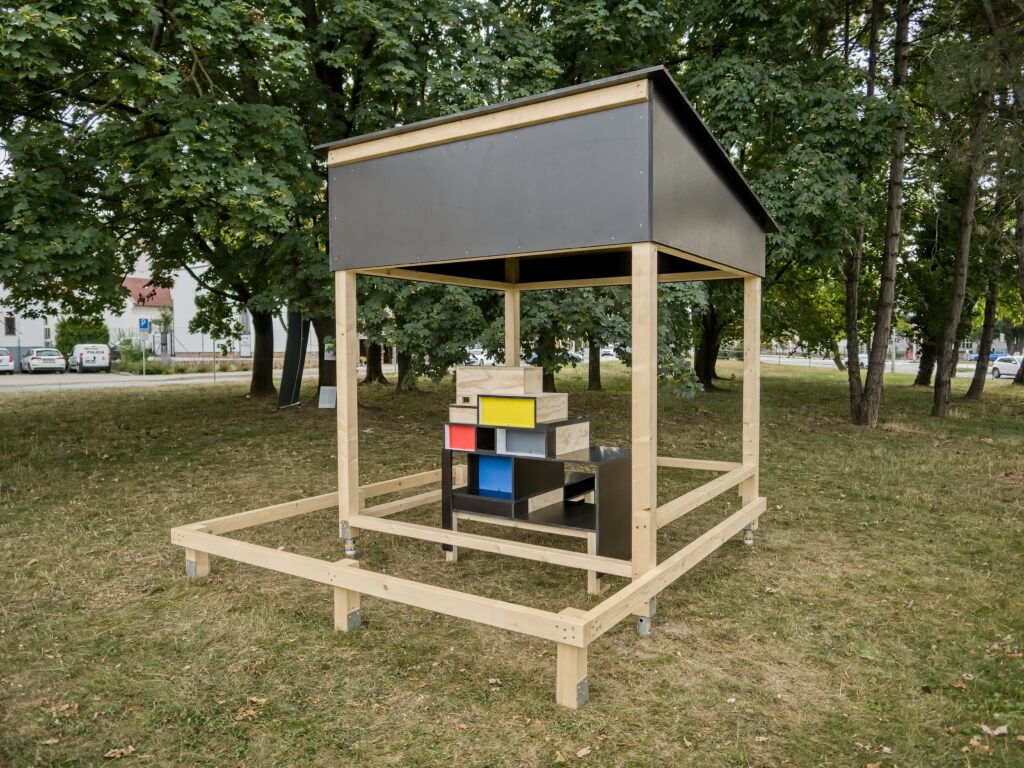
Bauhaus Beehive is part of Tamás Kaszás’s long-term artistic research, which examines modernist utopias through a post-utopian lens. Constructivism, Bauhaus and De Stijl are considered unrealized social models that remain aesthetically influenced but remain detached from everyday life. Kaszás reinterprets modernist architecture for non human inhabitants (bees). The beehive represents a structure that is both a work of art and a living environment.
Location: Green space near the intersection of Palackého and Hasičská Streets, Trenčín
Bees (along with other pollinators) are considered essential for the survival of humanity and the maintenance of biodiversity. At the same time, the organization of the bee society within the hive is often compared to human civilizations and, not by chance, has repeatedly become an inspiration for architects – whether it is a regular modular beehive or the honeycomb itself, they were the basic model for modernist, functionalist architects (Le Corbusier, Mies Van Der Rohe). In Kaszás’s work, at first glance, the construction principle is “imposed” on the bee family, but the complex design of the hive also provides greater variability and freedom.
Bees, as a kind of barometers of the state of the environment, are extremely sensitive to changes in the air, pesticides, temperature changes, or drought. Paradoxically, their survival in an urban city is not more demanding than in the countryside – unlike a monocultural agricultural landscape, they use the diversity of the urban flora here more.
Despite the complex constructions, Kaszás used the dimensions and frames of a classical extension system and was created in collaboration with a local carpenter Martin Ambruš.
Instead of focusing on production, the project focuses on beekeeping as an artistic and ecological practice. The hive becomes a space of coexistence and observation, responding to the needs of the bee colony as a superorganism while also reflecting on sustainability and the legacy of modernist design.
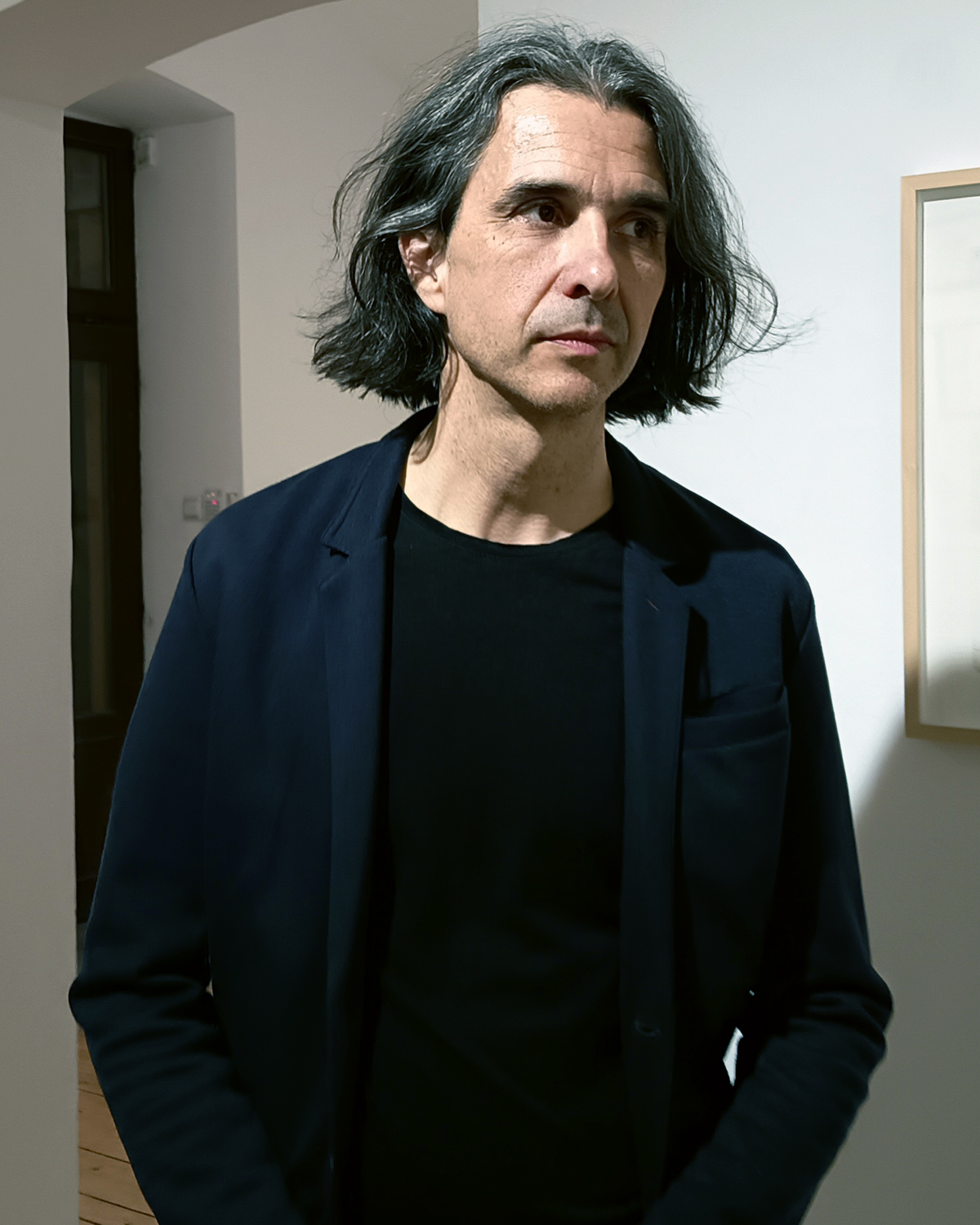
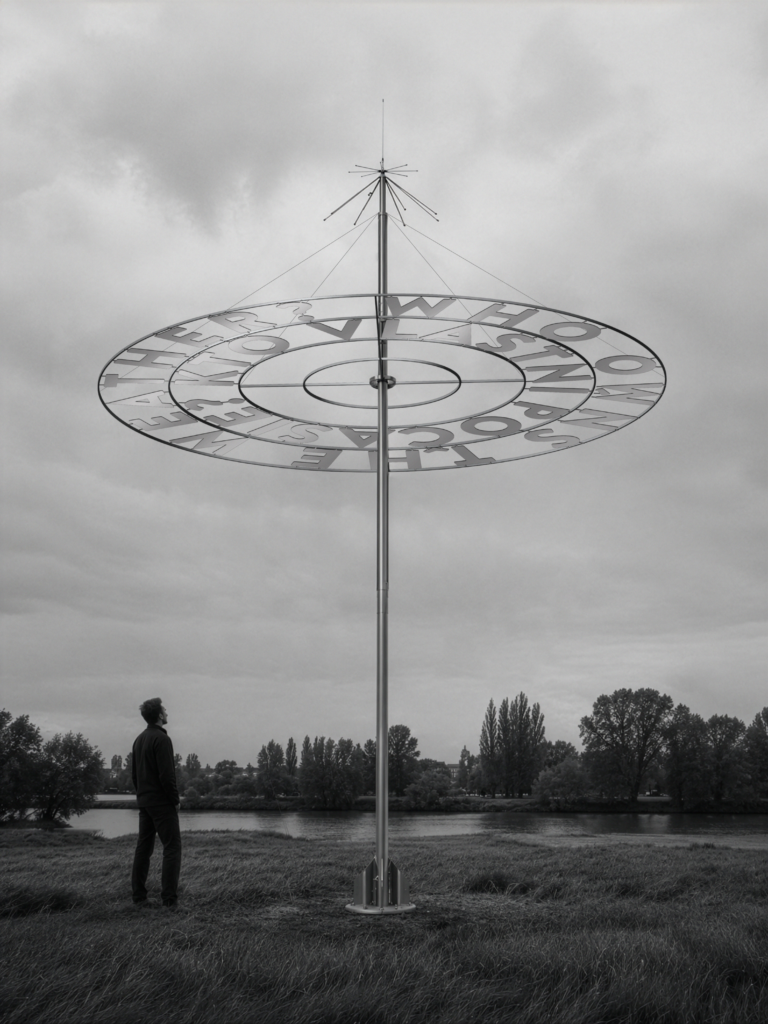
Tamás Kaszás (1976) is an artist living in Budapest who graduated from the Hungarian University of Fine Arts, where he currently teaches. He creates complex, research-oriented projects using traditional and new media, mixing poetic images with functional inventions. His individual works usually appear as constellations within larger installations, which he calls “visual auxiliary constructions”, as well as social and ecological issues dealing with spiritual practices. Recurring themes include collapse and survival, self-sufficiency and autonomy, theory versus practice, folk science, fictional anthropology, and life in nature. He co-founded two artistic duos: Randomroutines (with Krisztián Kristóf, since 2003) and Ex-artists’ Collective (with Anikó Loránt, 2003–2020). Solo exhibitions include the Hungarian National Gallery in Budapest (2023), Trafó House of Contemporary Arts in Budapest (2021), de Appel in Amsterdam (2018), Museu Calouste Gulbenkian in Lisbon (2017), Muzeum Sztuki in Łódź (2016), and Galerie Krinzinger in Vienna (2014). Group exhibitions include Werkleitz Gesellschaft in Halle (2025), EVA International in Limerick (2023), documenta fifteen in Kassel (2022), OFF-Biennale Budapest (2017), Bucharest Biennale 7 (2016), 19th Biennale of Sydney (2014) and 12th Istanbul Biennale (2011)