Tímea Szőke is one of the seven lecturers who come to Trenčín twice a year to share their know-how with those who work in culture and want to level-up their experience. Tímea was born in Serbia and currently dives into placemaking practice in Spain. We asked her about her journey, research and workshops in Trenčín focused on branding and networking. Yes, it makes quite an interesting mix with Tímea’s background! Come and have a look at what you can experience again this autumn with RUNWAY Culture Professionals.
Tímea, in the RUNWAY Culture Professionals course, you lead an educational block focused on branding and networking, but you put in a large part of your placemaking practice. What does the connection between culture, public space, and community engagement mean to you personally? And how do you approach including the creative placemaking practice in your course session?
I see a strong link between placemaking and branding, communication and networking. The essence of placemaking is transforming spaces into places, filling them with meaning, connection, and a sense of belonging. This is precisely what we aim for with our cultural initiatives.
In these sessions, I draw from my experience in the cultural field, creating a space for dialogue and reflection. I’m not a typical communications expert; instead, I share examples from my own journey, posing provocative questions to create a discussion. I introduce frameworks inspired by regenerative practices that shifted my thinking towards value-driven, relational work, looking at branding and communication beyond chasing social media engagement or algorithms, which just didn’t work for me.
The connection to networking is even clearer: our work is fundamentally relational. Meaning for ourselves, our initiatives, and our audience all come from these relationships. We explore different ways to build them, and during the session, we actively foster a network among participants, creating opportunities for potential collaborations. The whole session is built on peer-learning, co-creation, and shared sense-making in a creative and fun way.
What do you want participants to take away from your workshop?
I hope they realise that communication and networking, which are so often seen as necessary evils, can actually be meaningful, creative parts of our work. When approached differently, these tasks can add value to our initiatives and help us engage in authentic, meaningful conversations.
What specific activities do you use to convey this to them? Can you describe the workshop process in more detail?
In my workshops, I use a mix of interactive and reflective activities to shift perspectives and build connections. We check in and check out before and after each block. There are creative invitations to express challenges and struggles and possible solutions through storytelling, vision boards, and role-plays. I’m trying to create the framework for individual and group explorations around the topics rather than offering a concrete methodology or steps to take, but I also share my own experiences in communication, networking and collaboration. I use formats like the Open Space Technology or the ProAction Cafe to tackle real-life cases from the group collaboratively. To build connection and collaboration within the group, I offer the commons theory and a gift circle, which was actually the favourite of most of the previous groups. But there is also space to just talk and listen to each other.

In your view, what are the biggest challenges cultural managers face in cities today?
Honestly, this list probably doesn’t need much explanation because it’s part of our everyday realities:
- Being under-resourced and underfunded, doing a lot with very little, over and over again.
- Challenged values, trying to stay true to what matters while navigating systems that often push in a different direction.
- Systemic crises, the big things that can’t be ignored: climate, inequality, polarisation… it all affects our work.
- Mental health and burnout, sometimes it’s hard to sustain ourselves while holding space for others too.
Is it your intention to address any of these challenges in the workshop? How might this help participants?
Absolutely! These challenges are exactly why I do this work. In this kind of practice, there are no quick fixes or step-by-step guides. Instead, it’s about shifting perspective, moving away from trying to solve problems, and toward seeing potential, connection, and what truly matters in that situation.

Have you noticed any “aha moments” during the course, when participants discover new perspectives or realize the potential of their work?
At first, what I bring can feel a bit fuzzy or even “woo-woo”, but I love the moment when people realise that being authentic and true to their values is not only important, but something that should not be compromised.
I also love seeing people having fun and being creative, which we sometimes forget among our daily tasks.
Could you tell us more about your professional journey? How did you become involved in urbanism and creative placemaking?
I’m a village girl who grew up in a small town in Serbia, so I’ve always been fascinated by cities, by how many things and people have to collaborate and align for that complex system to work. My path wasn’t linear, but it makes total sense to me. I studied humanities, art history and film while working with NGOs and joining an art collective, Ziggurat Project, creating site-specific performances. That’s where my love for public space and creative collaboration began, even before I knew the word placemaking existed.
Later, during my master’s in social arts and design, I got even more curious about how we can design frameworks that support creativity and collaboration. Around that time, I joined the Hungarian Contemporary Architecture Centre (KÉK), and that’s where everything clicked, urbanism, community, and cultural practice all coming together.
Also, I started integrating more embodied practices like dancing, yoga, walking, and breathwork, which shifted not only my personal life but also the focus of my work. Our motto at my current art collectiv, the EMPOWERmental is “Feel yourself at home in your body and in the world”. And this kinda summarises my practice across the projects that I’m involved in.
Which specific projects or research experiences have had the greatest impact on you?
It’s very hard to choose only a few, I have the privilege to mostly work on projects that I enjoy.
Valyo Kikötő was one of my first experiences in placemaking, where I was involved in its creation and maintenance. Witnessing an abandoned spot by the Danube transform into Budapest’s coolest cultural spot for the summer was incredible.
My entire experience at KÉK taught me so many lessons in facilitating collaboration, the power of communities, valuing heritage, and generally making our cities more livable places.
In the Abundance Fellowship, we are exploring our relationship with money, wealth, and value, and alternative ways of looking at the economy. This experience was my profound introduction to regenerative practices and ways of doing things that felt like arriving home in my professional journey.
Currently, I’m deepening my regenerative practice through the Power of Place learning journey, which is helping me explore my connections to places and place-based work on a much deeper level.

You’re currently pursuing a PhD at the International University of Catalonia – what is the focus of your research?
It took me a while to land on the exact focus of my research. I entered the PhD knowing I wanted to explore the intersection of people, places, and well-being in our cities. Eventually, I discovered regenerative practices, and everything made sense. Now I’m combining regenerative thinking with placemaking, researching how urban and public spaces can become sources of regeneration, supporting the well-being of people and all life.
What are three things that are really close to your heart?
I know it’s supposed to be three, but for me, they naturally blend together:
- Nature and movement
Hiking, camping, swimming … being outside, moving, feeling my body, and sharing that with people I love. I’m always up for discovering something new, a city, a cause, a hobby. - Arts and creativity
Creative expression has this quiet power to shift perspectives, create meaning, and transform both personal and collective experiences. - Community and relationships
I care a lot about how we live together, how we build relationships in our cities, with our friends, with each other, and with the rest of the world.
What is your favourite place in Trenčín which you visit every time you come?
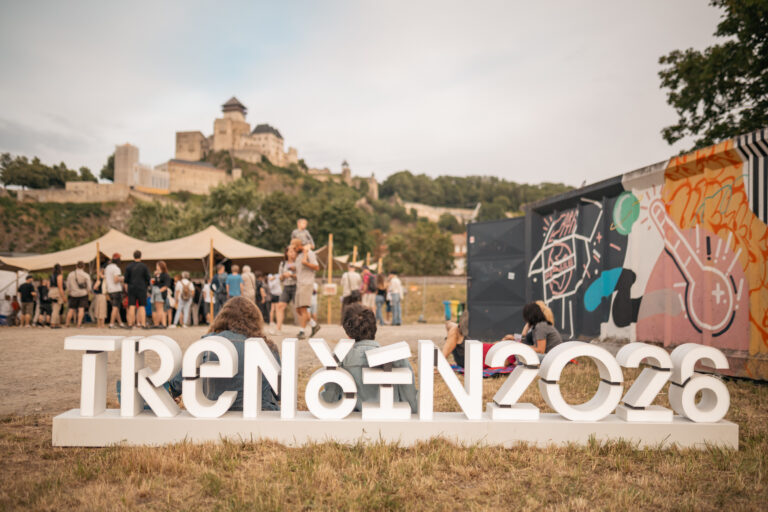
I usually don’t have much free time when I’m in Trenčín, but the first thing I always do is stroll down the cobblestone street in the center. I observe how things are at that moment, sensing the life of the city.
And finally, what would you say to those who are considering signing up for the course but are still unsure?
Investing time in your own learning and development is something I’ve never regretted. You never know who you’ll meet or what doors will open. It’s so valuable to be among peers, to reflect and make sense of the sector and the times we’re in, especially given the complex and diverse crises we’re navigating on so many levels.