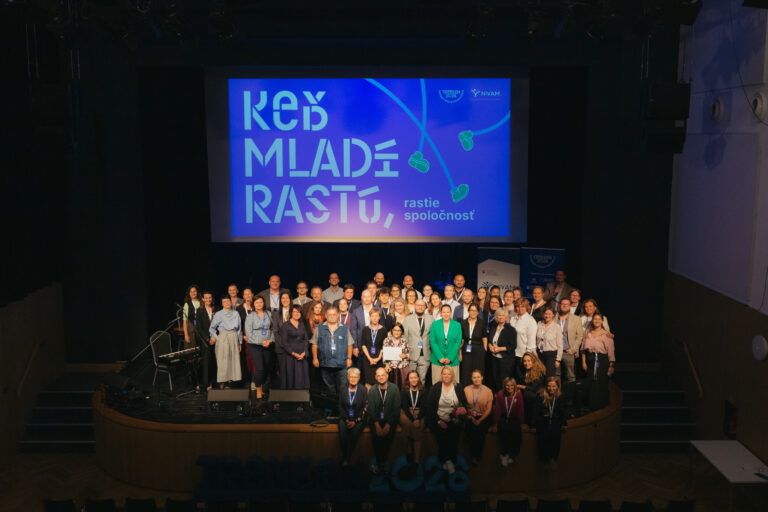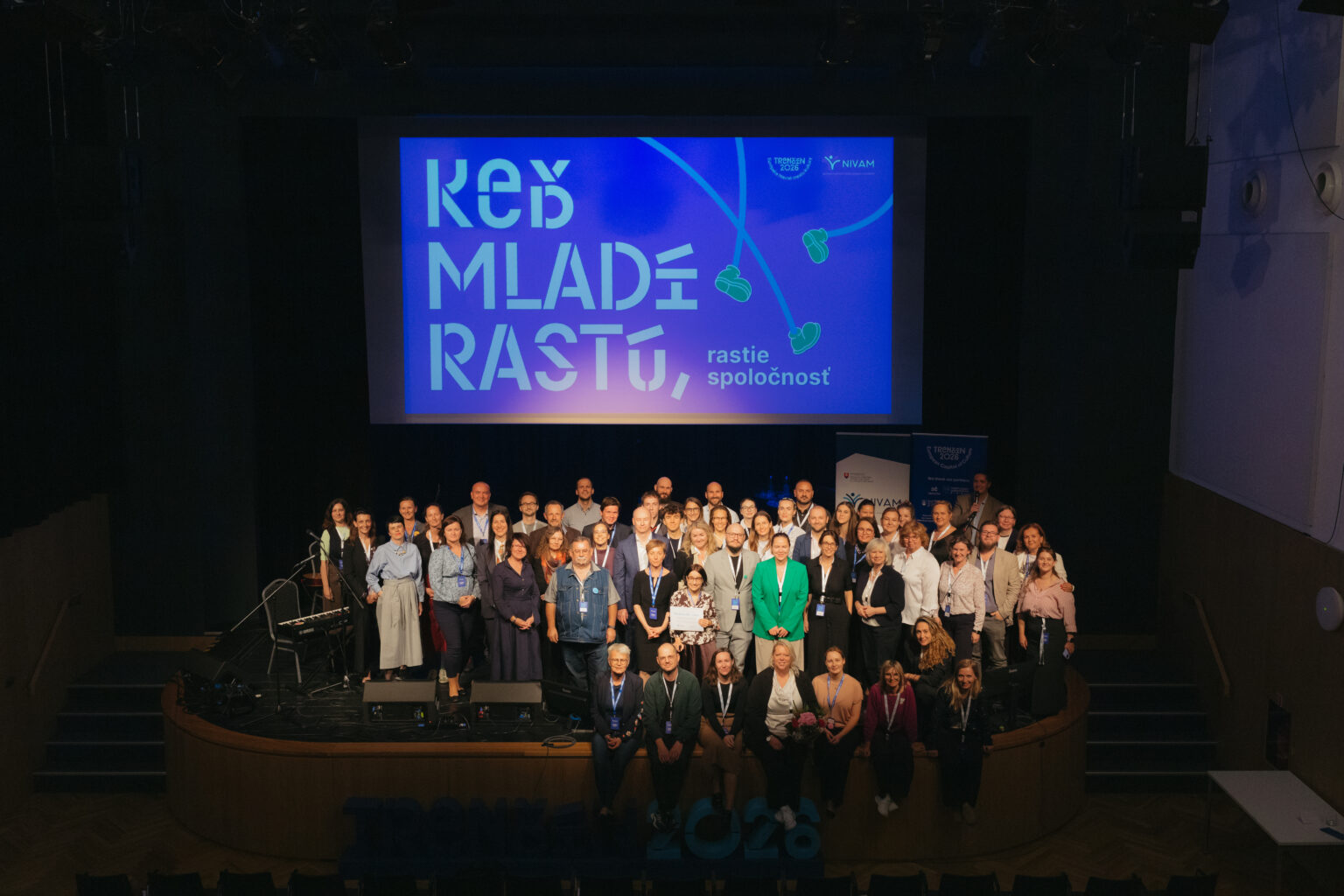

What happens when people who believe that young people need more space, trust and opportunities come together in one place? In Trenčín, the result was new connections, open conversations and practical inspiration. The conference When Young People Grow, Society Grows, held on 5 October at KKC Hviezda, brought together participants from across Slovakia.
Some participants arrived at the conference alone, without knowing anyone at the event, and left with a wealth of new contacts. This feedback perhaps best captures what the organisers managed to create: a space where people not only talked about collaboration but actually began building it.
The conference was organised by the Creative Institute Trenčín – Trenčín 2026 and the National Institute of Education and Youth (NIVaM). It brought together representatives of youth organisations, local authorities and other sectors involved in volunteering, participation and non-formal education.
The collaboration between Trenčín 2026 and NIVaM demonstrated how culture, education and youth work can naturally complement one another. Although each field brings a different perspective, they share a common goal: supporting young people’s development and encouraging their active participation in society. The importance of this connection was further highlighted by the patronage of the Ministry of Education, Research, Development and Youth of the Slovak Republic.
Nothing About Young People Without Young People
If we want to understand what young people need, we have to ask them.
It is not enough to design activities based on what adults think might interest young people. We need to involve them in developing programmes, making decisions and finding solutions. And then we need to trust them enough to give them the space to turn their ideas into reality.
Authenticity matters, too. Young people are quick to recognise when we are not communicating sincerely or when we try to connect with them in ways that do not feel natural to us. And they are perfectly capable of telling us exactly what they think about it.
Sometimes, all it takes is one good first opportunity. A chance to get involved, try something new and experience the feeling that your contribution matters. Such an experience can mark the beginning of further personal development, greater independence and a more active interest in the world around them.
From Practical Examples to Personal Experience
Five short introductory presentations showcased different approaches to engaging people, from the Trenčín 2026 volunteer programme and community projects to skills development. They all had one thing in common: behind every project are real people who were given the opportunity to participate and make a difference.
These experiences help develop skills that are becoming increasingly important well beyond volunteering. Communication, collaboration, problem-solving, independence and responsibility are not learned exclusively in the classroom. Non-formal education enables young people to learn through direct experience, in real-life situations and through interaction with others.
These examples were followed by three practical workshops developed in collaboration with organisations operating at both regional and national levels. The workshops connected experiences from individual towns and communities with broader perspectives on volunteering, participation and youth work.
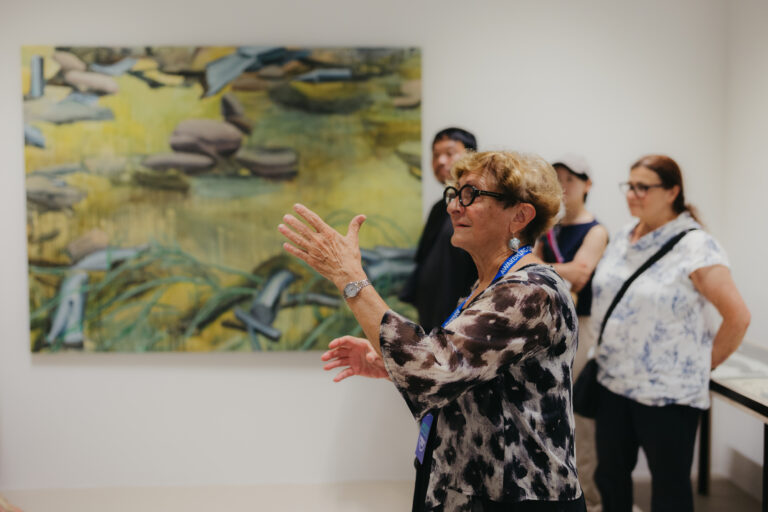
Rather than listening passively, participants had the opportunity to compare approaches, draw on their own experiences and explore solutions they could apply in their everyday work. This practical component was among the most highly appreciated parts of the conference.
The conversations did not end when participants left the workshop rooms. They continued during breaks and informal gatherings. People working on similar issues in different regions of Slovakia discovered shared experiences, made new contacts and identified opportunities for future collaboration.
Recognising Those Who Help Young People Grow
An important part of the conference was the Youth Worker of the Year 2025 awards ceremony, organised by the National Institute of Education and Youth (NIVaM). The awards shone a spotlight on people who create opportunities for young people, support their development and often help shape their first meaningful experiences.
Youth work is not simply about organising activities. It is also about building trust, providing support and recognising the potential of each young person. The awards highlighted the value of this work and the people who dedicate themselves to it every day.
Volunteering as an Investment in the Future
The afternoon panel discussion brought together perspectives from different sectors to explore volunteering as an investment in society’s future. Creating opportunities for participation is not the responsibility of any single organisation or institution.
Volunteering is about more than helping out at events or taking part in specific activities. It is also a way for people to build a connection with the place where they live, gain new experiences, learn to work with others and gradually take responsibility for their surroundings. For young people, these experiences can be an important step towards active citizenship.
The conference also included the signing of the Declaration on the Recognition of the Benefits of Non-Formal Education in Youth Work, which the Creative Institute Trenčín – Trenčín 2026 also joined. By signing the declaration, the institute reaffirmed its commitment to promoting recognition of the experiences and skills young people acquire outside formal education.
A Powerful Title, an Even More Powerful Message
When Young People Grow, Society Grows. The conference title captured the central idea running throughout the day: investing in young people means investing in a better future for all of us.
Young people need more than ready-made programmes they can sign up for. They need to know that their opinions matter, that they can make a difference and that their experiences are valued.
The conference in Trenčín did not offer a single universal formula for achieving this. It did, however, provide something to build on: practical experience, new connections and a shared conviction that we cannot plan young people’s futures without involving them.