
- You are currently creating a new permanent artwork in Trenčín called Cherry Pit Spat Out by the Sky. Can you tell us the story behind this poetic title? How did the idea first come to you?
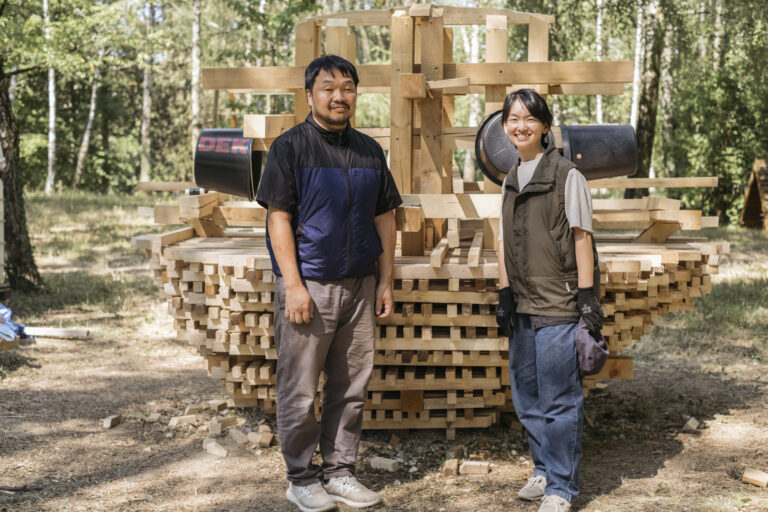
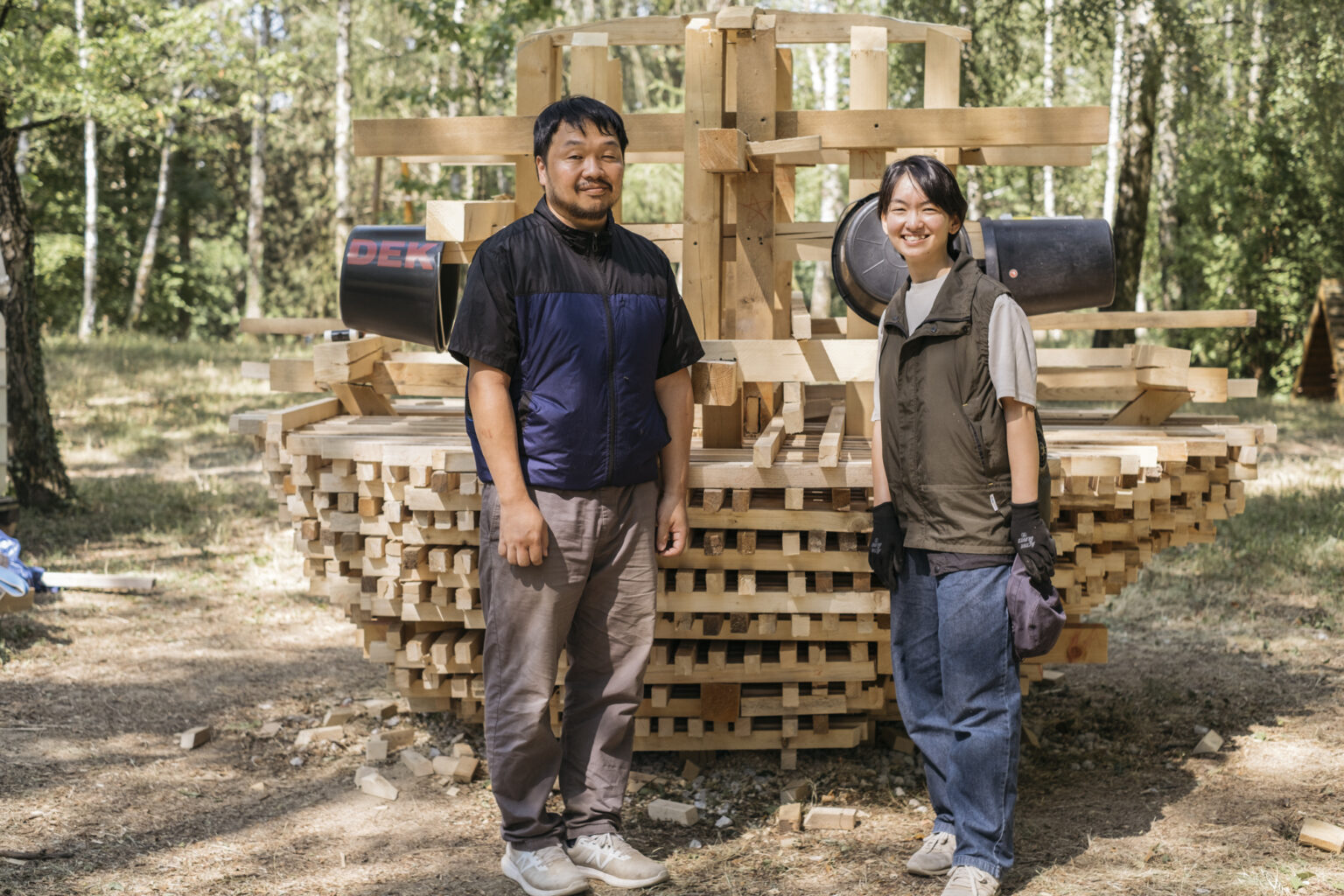
This work is inspired by the image of a cherry pit. This is a reference to the Cherry Orchard, the venue where the work is being created and exhibited. I imagined how, over many years at that location, birds and people have enjoyed eating cherries and spat the pits onto the ground with a ‘pop’. Although this work was inspired by the image of a cherry pit spat out of someone’s mouth and falling to the ground, as it is a large ‘seed’ (the artwork itself), I have also incorporated the idea that it might have been spat out by a giant, or perhaps even fallen from outer space. Through this work, I wanted to express the stories of cherries and people that have accumulated in this place, the cycle of nature―including humankind―and the passage of time.
- Your work often grows out of careful observation of nature and everyday life. What was your first impression of the Cherry Orchard in Trenčín, and what inspired you about this particular place?
I found it to be a very peaceful and quiet place. There are wooden play structures and barbecue areas, and many people take their daily walks here; as is evident from the history of the cherry orchard, I felt it was a place cherished by the local community. It is also rich in nature; amidst the many trees swaying in the wind, various birds and insects bustle about every day. Therefore, I felt the artwork should blend into the surroundings in such a way that it is cherished not only by people but also by flora and fauna. At the same time, I hoped it would serve to make the complexity and changes inherent in this place more accessible and visible.
- The cherry pit in your sculpture can be seen as a seed, a shelter, or even a small vessel carrying new life. What does this symbol personally mean to you?
A seed is a home, a vessel that carries life, and a means of survival.
My choice of this symbol is not unrelated to today’s environmental crises and the increasingly complex social conditions. Although it is a difficult task, I hope that the artwork will serve as a beacon of hope. If you observe this place closely, you will notice that there are many cherry seeds scattered on the ground. However, as they lie there, almost no one notices their presence. Even such an insignificant presence can sustain life and entrust hope to the future. I have also superimposed the image of a home onto the work. Indeed, the wooden structure of the piece resembles a block of flats or a shelter made up of small rooms, and I imagine that, whilst on display, it could serve as a home for tiny creatures.
- You have spent time in artist residencies in different countries. How does working in an unfamiliar place influence your creative process? Does the local landscape or the people you meet become part of the artwork?
Creating art in unfamiliar surroundings provides a wealth of stimulation and has a lasting influence on both my creative process and my thinking. It can sometimes provide inspiration for new works, and there is no doubt that it is an immensely enriching experience for me. However, this is built upon an accumulation of very ordinary events. I feel that inspiration comes from the small incidents of daily life, giving rise to works that can be created at that particular moment.
- The artwork is made from natural materials such as wood, straw, and clay. Why are these materials important to you, and what can they express that other materials cannot?
This work has been created primarily using natural materials such as wood, soil and straw. Soil, for example, contains both water and microorganisms, and possesses a complexity that humans cannot replicate. I use natural materials in my work precisely because I value this complexity.
Typically, outdoor sculptures are expected to convey a sense of eternity or permanence through their unchanging nature. However, as this work is made entirely from natural materials, it is likely that, during the exhibition period, the soil on the surface may be washed away, the wood may rot, or grass may grow from the work itself. This work will continue to change even after its completion. Just as real cherry blossom seeds undergo change, I wish to express this work as something that embraces such transformation. ‘Nothing remains unchanged’―this is at the very core of my artistic practice. It is precisely because everything is in a state of constant flux that the world is beautiful; we must always keep thinking and maintain a balance. These are the thoughts I am exploring.
- Your sculptures often seem calm and quiet, yet they invite people to slow down and imagine stories of their own. What kind of experience do you hope visitors will have when they encounter the sculpture in the Cherry Orchard?
It goes without saying that all things are constantly changing, and humans are part of this vast cycle. I would be delighted if I could convey that this is not only strange and mysterious, but also deeply moving. Whilst accepting all forms of change can be difficult at times, it simultaneously points to the possibility of creating a new future.
- Cherry Pit Spat Out by the Sky is the first artwork in the new LANDMARKS series, which connects contemporary art with the landscape of the Trenčín region. What do you think public art can bring to places that people usually visit for walking, cycling, or simply spending time in nature?
Every place has its own hidden history and stories. This cherry orchard, for instance, may appear at first glance to be a peaceful spot for a barbecue, but if you listen closely, you can hear the sound of woodpeckers pecking at the trees, and the ground is strewn with cherry pits. I would be delighted if, through my work, you could rediscover the landscapes that blend into everyday life and sense the passage of time that this place has accumulated.
- Many people may be discovering your work for the first time through this project. What would you like visitors in Trenčín to know about your artistic approach, and what do you hope they will take away from this encounter with your work?
The answer is the same as for Question 6.
Bonus questions
- You often speak about time—not as something measured by clocks, but as something that flows through places, nature, and people. How does this way of thinking influence your art?
Time is a mysterious thing; sometimes it feels long, sometimes short. There are moments when it feels as though the past is stretching on forever, whilst at other times we are suddenly struck by the sensation that the future has arrived. I often think of time as something like water, connecting different existences. This is purely a figment of my imagination, but I believe that through the concept of time, we can imagine people living in different places and eras.
- This artwork will remain in the landscape long after your residency ends. How do you feel about leaving a part of your work—and perhaps a part of yourself—in a place so far from home?
Whilst I am very pleased about this, I am also feeling a little nervous. The reason for this is that there are aspects of how the work will evolve that even I do not yet understand.
That said, this is my first time in Slovakia and Trenčín, and although I felt a little anxious at first, everyone has been so kind, and I am now really enjoying creating my work here. So I am hopeful that my work will be well received by everyone.
- After spending a month in Trenčín, what will you take home with you—not in your luggage, but in your memories?
I don’t think I’ll ever forget these beautiful landscapes and the kind people here.