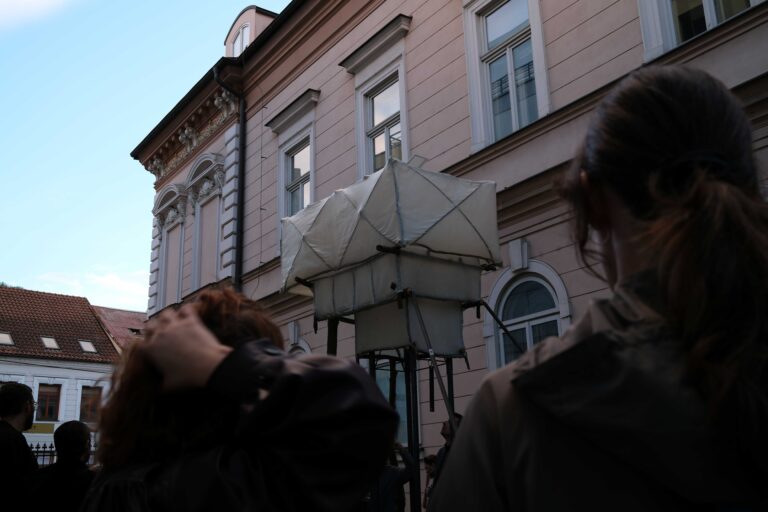
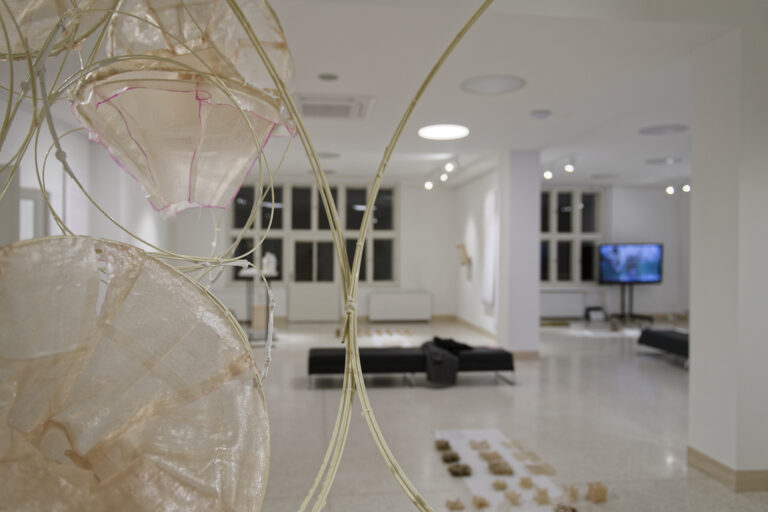
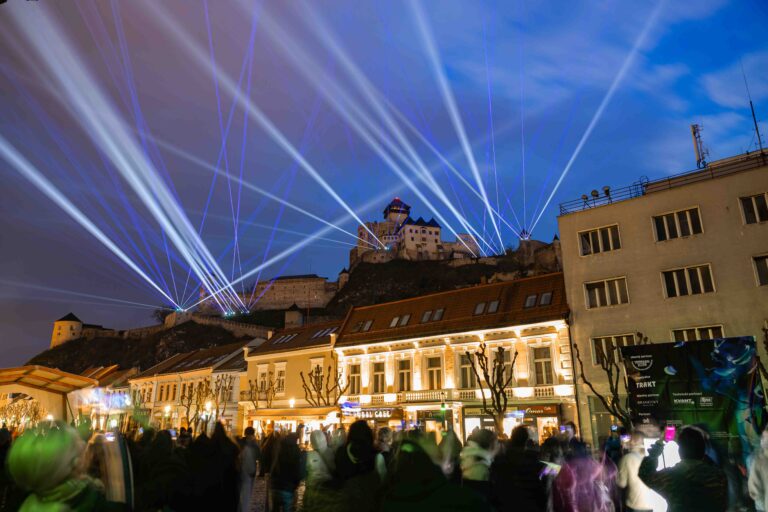
The exhibition The Thin Green Line, curated by Oto Hudec, will open in the historic County House building in Trenčín as part of the Green Line project within Trenčín 2026 – European Capital of Culture. It has been opened on 11 September 2026 (running until 6 December 2026) alongside new works in public space by international and Slovak artists installed across the city centre.
The exhibition brings together internationally recognised artists whose work addresses environmental themes — the climate crisis, biodiversity loss, pollution, and direct activism. The title refers to a fragile yet resilient boundary line, evoking both non-violent civic resistance and forms of nature’s own defence.
Participating artists include Anca Benera and Arnold Estefan, Rudolf Sikora, Melanie Bonajo, Rory Pilgrim, Oliver Ressler, Cecylia Malik, Martin Piaček, and Comunite Fresca, among many others.
The exhibition reflects on the current state of the environmental — particularly climate — movement, which saw a significant rise around 2018–2020 but was later slowed by the global pandemic, military conflicts, and rising nationalism. Despite the ongoing urgency of environmental crises, bold climate policies remain stagnant, and the possibility of preventing major environmental change appears increasingly distant.
In this context, the exhibition explores themes of activism, community care, the limits of growth, and alternatives to an anthropocentric understanding of nature.
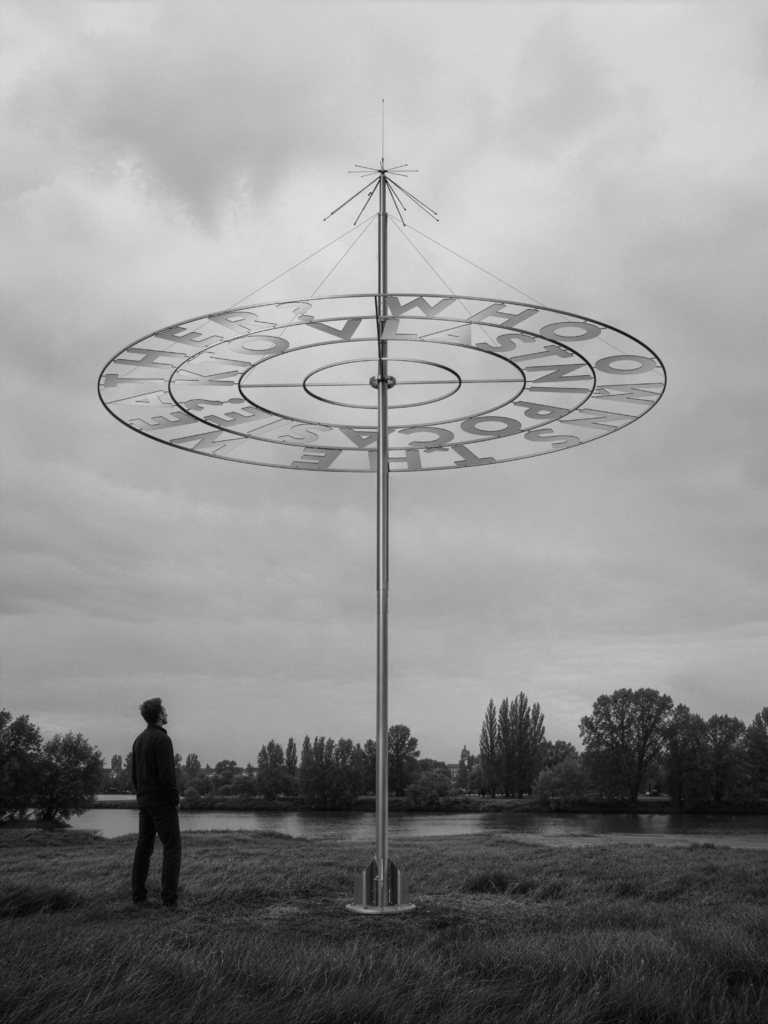
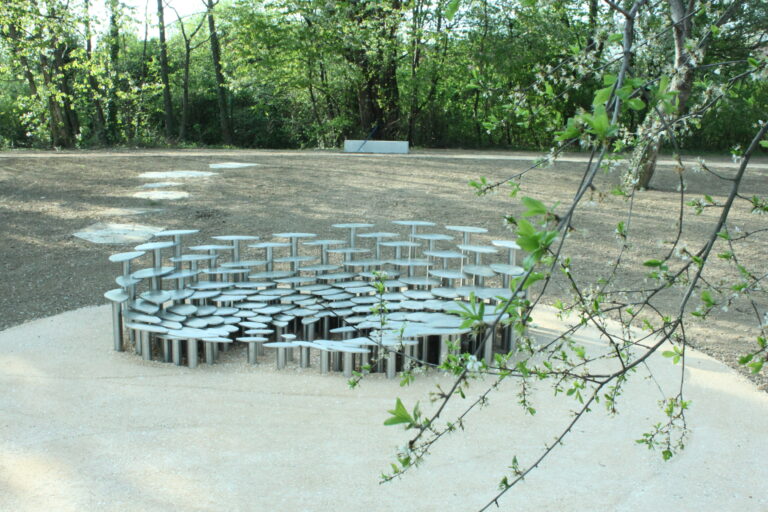
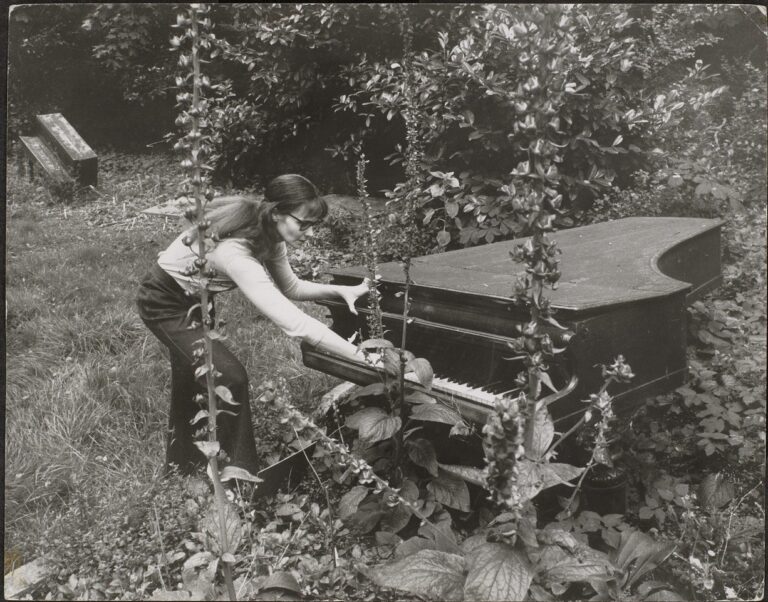
The exhibition opens with Rudolf Sikora’s iconic 1970s work Exclamation Mark, adapted to the landscape of Trenčín. In the courtyard of the County House, visitors will also find a site-specific mural by the artistic collective Comunite Fresca, responding to the local flora of Trenčín.
Exhibition curator / Green Line programme curator: Oto Hudec
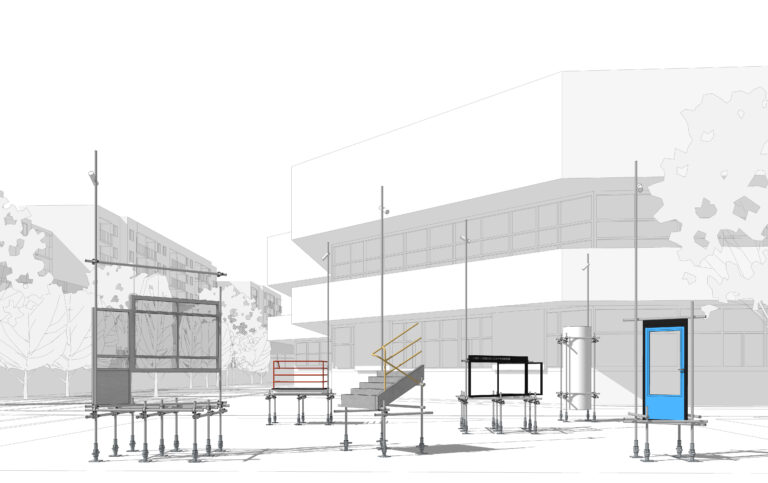
Exhibition architect: Peter Liška
Comunite fresca
Dana Balážová, Markéta Filipová, Marie Štindlová
Song for Water in the Landscape
2026
Fresco Painting
Created specifically for the courtyard wall of the Župný dom, this work was executed using the traditional fresco technique, with pigments applied directly onto wet plaster. The painting reflects on a landscape undergoing transformation on intensifying drought, the growing scarcity of water, and its fundamental role in sustaining life.
The vessel draws on the visual language of archaeological illustrations and museum displays. A prehistoric clay vessel becomes an elemental container: a vessel in which water remains cool and pure, a womb that holds moisture and, with it, the potential for human existence. Enduring across millennia, it stands as a quiet reminder of one of life’s most essential substances. Throughout the painting, water indispensable yet increasingly fragile emerges in different forms, both visible and concealed.
The cypress rises through the dry landscape as a symbol of resilience and endurance. Capable of taking root in rocky soil and surviving harsh conditions, it carries within itself a sense of persistence. Its fragrant wood and foliage retain moisture, while its shade offers refuge to weary travellers. Water hidden deep beneath the earth seems to take physical form in the slender silhouette of the tree a quiet manifestation of what lies unseen below the surface.
At the same time, the cypress carries a more intimate geography. Its presence evokes memories of hot Italian evenings, lingering twilight, and aimless wandering through the gardens of an old castle. The landscape thus moves between the ecological and the personal, between archaeological memory and lived experience, between what the earth preserves and what it is slowly losing.
Oto Hudec
Oto Hudec is a Slovak multimedia artist working across video, murals, animation, sculpture, and public art. He has exhibited internationally in countries including Italy, the United Kingdom, Austria, South Korea, Cape Verde, Portugal, and the United States.
His work explores migration and the environmental impacts of globalisation, often through a utopian lens. Rather than focusing on technological solutions to climate change, Hudec examines the sustainability of nomadic and Indigenous communities. His projects address topics such as food and energy production, industrial transformation, and the decline of bee populations.
In 2024, he co-authored a collaborative project for the Slovak Pavilion at the Venice Biennale. He frequently works with children and young people from marginalised communities.
Hudec lives in Košice, Slovakia, where he also teaches at the Faculty of Arts of the Technical University of Košice.

📍 Župný dom, Mierové námestie 46, Trenčín
📅September 11 – December 6, 2026
Artists: Anca Benera & Arnold Estefán (RO/AT), Ursula Biemann (CH), Melanie Bonajo (NL), Comunite Fresca (CZ), Diana Lelonek (PL), Tamas Kaszás (HU), Cecylia Malik (PL), Monika Pascoe Mikyšková (SK), Martin Piaček (SK), Rory Pilgrim (UK), Rudolf Sikora (SK).